Automotive
Electric Vehicles vs. Fuel Vehicles: The Long-Term Value and Time Efficiency

When it comes to choosing a vehicle, we all have different priorities. For some, it’s all about the initial cost, while for others, long-term value and time efficiency are key factors in making a decision. With the rise of electric vehicles (EVs), the debate about whether they offer better value and time-saving benefits compared to traditional fuel-powered cars is heating up.
Let’s break it down and see how these two types of vehicles measure up in terms of long-term value and time efficiency — the two big factors that make or break a car-buying decision. Whether you’re in Melbourne or Perth, this debate is relevant to anyone considering an EV or sticking with a fuel-powered car.
Long-Term Value of Electric Vehicles (EVs)
Lower Operating Costs Over Time
One of the main arguments for electric vehicles is their lower operating costs over time. While the initial price of an EV may be higher than a traditional fuel vehicle, the long-term savings make it a great investment.
- Fuel Savings: Electric vehicles have significantly lower running costs, with electricity being much cheaper than petrol. According to the Australian Electric Vehicle Council, charging an EV can cost as little as $5 to $10 for a full charge, while fuel for a petrol vehicle can cost upwards of $50 per tank.
- Less Maintenance: EVs have fewer moving parts compared to internal combustion engine (ICE) vehicles. This means there are fewer parts to break, reducing the need for repairs. No more trips to the mechanic for oil changes, spark plugs, or exhaust issues.
- Long-Term Savings: Over the lifespan of an EV, these savings on fuel and maintenance can add up to thousands of dollars, offering better long-term value.
Example:
- In Melbourne, an EV owner could save about $1,500 per year on fuel compared to a fuel-powered car, based on average fuel prices.
Environmental Impact and Incentives
If you’re someone who’s passionate about sustainability, an electric vehicle is a no-brainer. EVs have a significantly lower environmental impact compared to petrol or diesel vehicles.
- Zero Emissions: EVs produce zero tailpipe emissions, which is a massive win for the environment. This is especially important in cities like Melbourne, where air pollution can be a concern, particularly in traffic-heavy areas.
- Government Incentives: Many state governments across Australia, including in Perth, offer rebates or tax breaks for purchasing EVs. These incentives can help offset the higher upfront cost of an EV, making them even more attractive. For example, Melbourne has introduced a $3,000 rebate for eligible EVs.
- Sustainability Goals: With Australia aiming to reduce carbon emissions and improve air quality, EVs are seen as a key part of the solution.
Resale Value
As the market for electric vehicles grows, so does their resale value.
- Increasing Demand: With more Australians switching to EVs, their resale value is improving. Many people are now seeing EVs as a long-term investment rather than just a temporary trend.
- Future-Proof Investment: As infrastructure like charging stations improves, EVs will hold their value better in the future, especially as consumers increasingly move toward sustainable options.
Long-Term Value of Fuel Vehicles
Lower Initial Investment
While electric vehicles offer long-term savings, fuel vehicles still have an advantage when it comes to initial cost.
- Affordable Upfront Cost: Fuel-powered vehicles tend to be cheaper to buy compared to EVs. This makes them more accessible, especially for people who don’t have the budget for an EV right now.
- Wide Range of Options: Whether you’re after a compact city car or a family SUV, there’s a petrol vehicle for every need. Plus, the used car market for petrol vehicles is huge, giving buyers plenty of options at various price points.
Example:
- In Perth, a small fuel-efficient car like a Toyota Corolla can cost $15,000 or less, while an entry-level EV might start at $30,000 or more.
Familiarity and Convenience
- Widespread Infrastructure: Fuel-powered vehicles have been around for decades, and there’s no shortage of fuel stations in Perth and Melbourne. Whether you’re in the city or out in the bush, you’ll never be too far from a petrol station.
- Ease of Maintenance: Petrol vehicles are well-understood by mechanics, and replacement parts are readily available. This makes repairs and servicing easy and relatively cheap, especially in the early years of ownership.
- Resale Value: Fuel-powered vehicles have established resale markets, and while they may lose value over time, the depreciation is generally more predictable compared to EVs.
Higher Range for Longer Trips
One area where fuel vehicles still have an edge is range.
- Longer Travel Distance: Petrol cars can travel much further on a single tank compared to most electric vehicles. This makes fuel vehicles more convenient for long-distance road trips, especially if you’re in Perth, where wide-open spaces can make finding a charging station a bit of a hassle.
- Quick Refueling: A petrol vehicle can be refueled in just a few minutes at any service station, while EVs can take much longer to charge — even with fast chargers.
Time Efficiency: EVs vs. Fuel Vehicles
When it comes to time, both EVs and fuel vehicles have their pros and cons. Let’s break it down.
Electric Vehicles:
- Home Charging: One of the time-saving features of EVs is that you can charge your vehicle at home, meaning no need to go to a petrol station regularly.
- Charging Time: The downside is that charging an EV takes time. While fast chargers can charge an EV in about 30 minutes, regular chargers can take anywhere from 4 to 12 hours.
- Maintenance: EVs have fewer moving parts, meaning you spend less time in the garage for maintenance or repairs.
Fuel Vehicles:
- Quick Refueling: The major advantage of fuel vehicles is time efficiency when it comes to refueling. A quick trip to the service station, and you’re back on the road in just a few minutes.
- Maintenance: While fuel vehicles require more regular maintenance, most mechanics are widely available, and parts are easy to find.
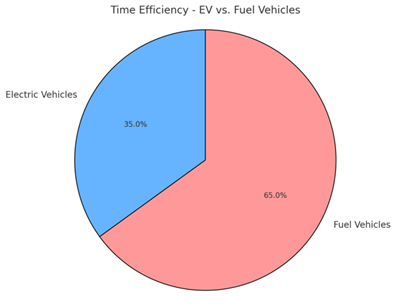
Pie Chart: Time Efficiency – EV vs. Fuel Vehicles
Here’s a pie chart showing the time-saving benefits of EVs vs. fuel-powered vehicles based on refueling time and maintenance needs:
| Vehicle Type | Time Efficiency (%) |
| Electric Vehicles | 35% |
| Fuel Vehicles | 65% |
Conclusion: The Final Verdict
The choice between an electric vehicle and a fuel-powered vehicle depends on your priorities. Electric vehicles provide excellent long-term value with lower operating costs, environmental benefits, and fewer maintenance needs. However, they come with a higher initial price and longer refueling times.
On the other hand, fuel vehicles still shine when it comes to initial cost, ease of refueling, and established infrastructure. They are often the go-to choice for those who need a car for longer trips or those who don’t have easy access to EV charging stations.
Ultimately, the decision comes down to personal needs, driving habits, and what you value more — time efficiency or long-term sustainability.


A Local’s Perspective on Choosing the Right Plumber in Altona

From Design to Durability: Choosing the Right Cabinet Hardware in Melbourne

A Closer Look at WordPress Web Hosting in Australia: Tools, Features, and Real Benefits

Eastern Eats: 6 Must-Try Restaurants in Melbourne’s Eastern Suburbs

Why Community Participation in Alice Springs Matters: Bridging Gaps, Enhancing Opportunities, and Building Stronger Communities

Don’t Let Heel Pain Rule Your Life: Why Heel Pain Specialists in Sydney Are the Experts You Need
-
 Food10 months ago
Eastern Eats: 6 Must-Try Restaurants in Melbourne’s Eastern Suburbs
-
 Healthcare10 months ago
Why Community Participation in Alice Springs Matters: Bridging Gaps, Enhancing Opportunities, and Building Stronger Communities
-
 Healthcare10 months ago
Don’t Let Heel Pain Rule Your Life: Why Heel Pain Specialists in Sydney Are the Experts You Need
-

 General10 months ago
The Role of Speech Therapy in Treating Common Speech & Language Disorders
-

 Healthcare10 months ago
Supporting Your NDIS Journey in Sydney: Why Partnering with a Skilled Provider Can Make a Lasting Difference in Your Life
-

 General10 months ago
Polycarbonate Roofing Sheets: Why They Are the Go-To Option for Outdoor Structures, Greenhouses, and Patios
-

 Healthcare10 months ago
Managing Chronic Conditions with Ease: Understanding the EPC Plan
-

 Healthcare10 months ago
Partial Nail Avulsion (PNA): A Quick and Effective Solution for Ingrown Toenails