
Business
Social Media’s Impact on Business: Growth, Marketing, and Challenges


In today’s world, social media is more than just a platform for posting cat memes and holiday photos. It has become an essential tool for businesses of all sizes — from startups to established companies — to grow, connect, and engage with their audience. Whether you’re in Perth, Melbourne, or anywhere in Australia, leveraging social media can be the key to your business’s success. But just like any tool, it comes with both advantages and challenges.
In this blog, we’ll dive into the positive and negative impacts of social media on businesses and explore how companies can make the most of this powerful tool while navigating the challenges it brings.
The Positive Impact on Business
Let’s start with the sunny side — social media has revolutionised the way businesses can grow and interact with their customers. It’s become an indispensable part of marketing strategies for companies worldwide, and here’s why.
1. Brand Awareness and Reach
- Social media allows businesses to reach a global audience. With over 4.5 billion people using social media worldwide (Source: Statista), your potential customers are already online.
- Small businesses in Melbourne and Perth can now compete with larger companies by creating strategic campaigns that target specific audiences.
- Platforms like Instagram, Facebook, and LinkedIn offer tailored advertising options, helping businesses connect with potential customers and build brand recognition.
How It Works:
- Targeted Ads: With the help of data and algorithms, businesses can create ads that are displayed to people most likely to be interested in their products or services.
- Organic Reach: Through engaging content, hashtags, and collaborations, businesses can expand their reach without spending a dime.
2. Customer Engagement and Feedback
- Social media allows businesses to interact directly with customers, giving a human touch to customer service.
- Platforms like Facebook and Twitter enable businesses to reply to comments, answer questions, and resolve issues in real-time.
- Engaging with customers through social media not only builds trust but also strengthens relationships with existing clients and attracts new ones.
How It Works:
- Comments and Direct Messages: Interacting with followers helps businesses stay top of mind and build a loyal community.
- Live Videos: Many businesses host live Q&A sessions or product demos, offering direct interaction and instant feedback.
3. Cost-Effective Marketing
- Compared to traditional forms of advertising (TV, radio, print), social media marketing is significantly cheaper.
- This makes it a highly accessible option for small businesses and startups in cities like Perth and Melbourne that might have limited budgets.
- You don’t need to break the bank to advertise on social media; with as little as $10 a day, you can run a campaign that reaches thousands.
How It Works:
- Budget Flexibility: Social media platforms allow businesses to adjust their ad budgets and track their performance, ensuring they get the best ROI.
- Influencer Marketing: Collaborating with local influencers in Melbourne or Perth can also be an affordable way to increase brand visibility.
The Negative Impact on Business
As much as social media has its perks, it’s not all sunshine and rainbows. Like any tool, it has its challenges that businesses must learn to navigate. Here’s a look at some of the downsides.
1. Negative Publicity
- While social media offers a platform for businesses to engage with customers, it also opens the door for negative reviews and public complaints.
- One dissatisfied customer can quickly air their grievances, and if the issue goes viral, it can damage a company’s reputation in a matter of hours.
- Negative reviews on platforms like Google, Facebook, or Instagram can discourage potential customers from doing business with you.
How It Works:
- Quick Responses Are Key: The faster you respond to negative comments or reviews, the better. It shows that your business cares about its customers’ concerns.
- Public Relations: It’s essential for businesses to manage their online reputation by addressing issues openly and offering solutions.
2. Time and Resource Intensive
- Managing a social media presence requires consistent effort. To succeed, businesses need to produce engaging content regularly, interact with followers, and stay updated with trends.
- Without a dedicated team or tools, social media management can become overwhelming, especially for small businesses.
- Content creation — from designing graphics to shooting videos — takes time, and staying active on multiple platforms can stretch your resources thin.
How It Works:
- Content Calendar: Planning content ahead of time can help businesses stay organised and reduce stress.
- Social Media Tools: Platforms like Hootsuite and Buffer help businesses schedule posts and track analytics.
3. Privacy and Security Risks
- As businesses collect customer data through social media, the risk of data breaches and privacy concerns increases.
- Hackers and cybersecurity threats are real, and any data leak could result in a loss of customer trust.
- Small businesses without adequate security measures may be more vulnerable to these risks.
How It Works:
- Data Protection Policies: Businesses must follow strict privacy policies and ensure that their customer data is safe.
- Security Measures: Implementing two-factor authentication and encrypting sensitive data can help businesses protect their online presence.
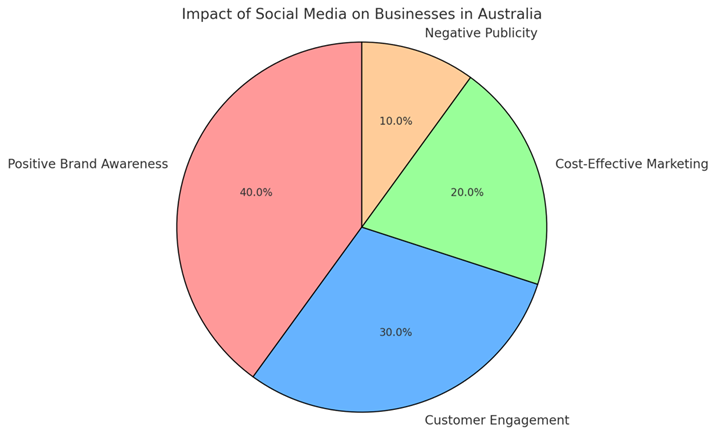
Pie Chart: Impact of Social Media on Businesses in Australia
Based on a survey of 500 Australian business owners, here’s a breakdown of the perceived impact of social media on their business:
| Impact Type | Percentage of Business Owners |
| Positive Brand Awareness | 40% |
| Customer Engagement | 30% |
| Cost-Effective Marketing | 20% |
| Negative Publicity | 10% |
The Key to Social Media Success: Strategy and Consistency
To thrive on social media, businesses must approach it with a strategic mindset and consistent efforts. Here are a few tips to maximise the benefits:
- Know Your Audience: The first step to a successful social media strategy is understanding who your customers are and where they spend their time online.
- Quality Content: Invest time in creating high-quality, engaging content that resonates with your audience. This includes everything from blog posts and videos to infographics and polls.
- Monitor Performance: Regularly track your social media performance with tools like Google Analytics and Facebook Insights to see what works and what doesn’t.
- Adapt to Trends: Social media trends change quickly. Stay on top of new features, hashtags, and viral topics that can help you connect with your audience.
Bar Graph: Best Social Media Platforms for Business Growth in Australia
Here’s a bar graph showing the most effective social media platforms for Australian businesses, based on a survey of 500 business owners.
| Social Media Platform | Effectiveness for Business Growth (%) |
| 40% | |
| 35% | |
| 15% | |
| 10% |

Conclusion: Navigating Social Media’s Opportunities and Challenges
Social media is undeniably a powerful tool for businesses, offering incredible opportunities for growth, marketing, and customer engagement. However, as with any tool, it’s not without its challenges. Negative publicity, the time required to manage your online presence, and the security risks are all very real concerns.
In the end, success on social media comes down to strategic planning, consistent effort, and a willingness to adapt to changes. If done right, social media can become a game-changer for your business, helping you reach new customers, build a loyal community, and grow your brand.


For many individuals and business owners, tax season often brings pressure, confusion, and tight deadlines. Gathering financial records, understanding deductions, and ensuring compliance with tax regulations can quickly become overwhelming. Instead of rushing through paperwork at the last minute, a smarter approach involves planning and managing finances throughout the year. Many people rely on a professional Tax Accountant Williams Landing to organise their finances and handle tax obligations with greater confidence.
Effective tax management is not only about submitting returns on time. It also involves maintaining accurate financial records, identifying eligible deductions, and ensuring that income reporting is correct. With the right approach, tax time can become a manageable process rather than a stressful event.
Why Early Tax Preparation Makes a Difference
Working with a Tax Accountant Williams Landing early in the financial year can significantly reduce the pressure that often builds up as tax deadlines approach. Many taxpayers wait until the last moment to organise receipts, invoices, and financial documents, which increases the likelihood of errors or missed deductions.
Preparing early allows individuals and businesses to maintain a clear record of income and expenses throughout the year. Instead of searching for documents when the deadline is approaching, everything is already organised and ready for review.
Early preparation also allows tax professionals to provide guidance on financial decisions that may affect tax outcomes. This proactive approach helps taxpayers understand their financial position and avoid unexpected tax liabilities.
Keeping Financial Records Organised
Accurate recordkeeping is one of the most important steps in reducing tax-related stress. Maintaining well-organised records makes it easier to track income, expenses, and deductions throughout the year.
Receipts, invoices, and financial statements should be stored in a secure and accessible system. Many individuals now rely on digital tools or accounting software to keep track of their financial information.
Good recordkeeping offers several advantages. It ensures that important financial data is not lost and allows accountants to review information quickly when preparing tax returns. It also helps taxpayers respond more easily if tax authorities request additional documentation.
Understanding Eligible Deductions
Many taxpayers miss out on legitimate deductions simply because they are not aware of them. Understanding which expenses can be claimed can significantly reduce taxable income.
Common deductions may include work-related expenses, business costs, education expenses related to employment, and certain charitable contributions. However, the eligibility of these deductions often depends on specific tax rules.
Professional tax guidance can help ensure that deductions are claimed correctly and within legal requirements. Identifying these opportunities can make a noticeable difference in the final tax outcome.
Managing Tax Obligations for Businesses
For business owners, tax responsibilities often go beyond annual returns. Businesses must also manage ongoing obligations such as goods and services tax reporting, payroll taxes, and financial record maintenance.
In the middle of these responsibilities, many businesses turn to a qualified Tax Accountant Williams Landing to ensure compliance with tax regulations and maintain accurate financial reporting. Professional assistance can help businesses stay organised and meet deadlines without unnecessary stress.
Consistent financial management also allows businesses to understand their financial performance more clearly. With reliable financial data, business owners can make informed decisions about growth, investments, and operational planning.
Avoiding Common Tax Filing Mistakes
Tax filing errors can lead to delays, penalties, or additional scrutiny from tax authorities. These mistakes often occur when taxpayers rush to complete returns without carefully reviewing their financial information.
Some common errors include incorrect income reporting, missing documentation, and miscalculating deductions. Filing returns without proper verification can also result in inaccurate financial statements.
Careful preparation helps reduce the risk of these mistakes. Reviewing financial records thoroughly before submission ensures that all details are correct and complete.
Using Professional Expertise to Simplify the Process
Tax regulations can change over time, and keeping up with these updates can be challenging for individuals who do not work in the field regularly. Professional tax accountants stay informed about current tax laws and reporting requirements.
Their expertise allows them to identify opportunities for tax efficiency while ensuring compliance with regulations. They can also assist with financial planning strategies that support long-term financial stability.
Professional guidance often simplifies the entire tax process. Instead of trying to interpret complex regulations independently, taxpayers can rely on accurate advice and organised financial management.
Building Better Financial Habits Year-Round
Handling taxes effectively involves more than preparing documents once a year. Developing strong financial habits throughout the year can make a significant difference when tax season arrives.
Tracking expenses regularly, maintaining updated financial records, and reviewing income statements periodically can help individuals stay prepared. These habits also provide a clearer understanding of personal or business finances.
Over time, consistent financial organisation can reduce stress, improve budgeting, and support better financial decision-making.
Conclusion
Managing taxes does not have to be stressful or overwhelming. With proper preparation, organised financial records, and professional guidance, taxpayers can approach tax season with greater confidence. Consulting a Tax Accountant Williams Landing can help individuals and businesses navigate tax obligations efficiently while reducing the pressure of last-minute filing. A proactive approach to financial management ultimately leads to smoother tax preparation and better financial outcomes.
FAQs
1. Why should taxes be prepared early instead of waiting for the deadline?
Preparing early allows more time to organise financial records, identify deductions, and correct any errors before submitting the return.
2. What documents are usually needed for tax filing?
Common documents include income statements, receipts for deductible expenses, bank statements, and previous tax records.
3. Can a tax accountant help reduce tax liabilities legally?
Yes, tax accountants can identify eligible deductions and ensure that financial records are structured in a way that complies with tax regulations.
4. Why is accurate recordkeeping important for taxes?
Accurate records make it easier to prepare tax returns, verify financial information, and respond to requests from tax authorities.
5. Do small businesses benefit from professional tax services?
Yes, professional assistance helps businesses manage compliance, maintain proper financial records, and avoid costly filing mistakes.

Winter has a way of exposing weaknesses around the home, and stormwater drainage is often one of them. When heavy rain meets already stressed outdoor systems, problems surface quickly. For many households, the first instinct is to call a Werribee-based plumber, but understanding what is happening — and what you can reasonably do — is just as important.
Blocked stormwater drains are more than a seasonal inconvenience. Left unattended, they can cause water to pool around foundations, spill into outdoor areas, or place unnecessary pressure on underground pipework. Acting promptly and sensibly makes all the difference.
Why Winter Makes Drainage Issues Worse
Stormwater systems are designed to carry rainwater away from your property efficiently. In winter, however, increased rainfall can test that capacity. If there is already a partial obstruction within the system, the added volume of water may quickly turn a minor issue into a visible overflow.
Homeowners often first notice the warning signs during or just after a downpour. Water may drain more slowly than usual, collect near grates, or rise back towards paved surfaces. These symptoms indicate restriction somewhere along the line.
It is at this stage that many consider contacting a Plumber in Werribee, particularly if the problem appears sudden or severe. However, before seeking assistance, there are sensible checks that can be carried out safely at ground level.
Start with a Careful Inspection
A measured approach is always preferable to a rushed one. Begin by visually inspecting accessible drainage points around your property.
Look for:
- Surface grates that are visibly obstructed
- Accumulated debris sitting over drain openings
- Signs of standing water that persist after rainfall
Clearing visible material from around grates can sometimes restore proper flow immediately. It is important, however, not to attempt dismantling fixed pipework or inserting tools deep into the system without the appropriate expertise. Stormwater infrastructure can be more complex than it appears, and improper interference may worsen the blockage.
If surface clearing does not resolve the issue, the obstruction is likely further within the system and requires professional assessment.
Recognising When It’s Time to Call a Professional
While minor surface obstructions can be handled carefully by homeowners, recurring or persistent drainage problems are rarely solved by repeated clearing alone. If water continues to pool despite visible grates being clear, the blockage is likely deeper within the pipe network.
At this point, engaging a qualified Plumber in Werribee becomes a practical step rather than a reactive one. A professional can identify whether the issue lies within a single section of pipe, a connection point, or a broader drainage run.
Attempting to ignore the problem in the hope that drier weather will resolve it is rarely effective. Even if the visible symptoms subside, the underlying obstruction may remain, setting the stage for further disruption during the next period of heavy rain.
Preventative Thinking for the Colder Months
Winter drainage issues are often reactive, but they do not have to be. A preventative mindset can significantly reduce the likelihood of sudden blockages.
Regularly checking stormwater entry points — particularly before forecast rainfall — allows small accumulations to be removed before they consolidate into more stubborn obstructions. Keeping surrounding outdoor areas tidy and ensuring water has a clear path into drains supports the system’s intended function.
It is also wise to pay attention to subtle changes. If drainage appears slower than usual, even without full overflow, that may indicate partial restriction. Early attention is typically simpler and less disruptive than waiting for a complete blockage.
Avoiding Escalation and Property Damage
Blocked stormwater drains can quickly shift from minor inconvenience to structural concern if water begins collecting near the home. Persistent pooling increases the risk of seepage into unwanted areas and may place additional strain on surrounding surfaces.
The key is measured escalation. Start with inspection and safe clearing of accessible areas. If symptoms persist, do not delay professional intervention. Addressing the root cause promptly protects not only the drainage system itself but the broader integrity of the property.
Winter conditions may be unavoidable, but preventable damage is not.
A Practical Approach for Homeowners
Seasonal rainfall is a reality for Australian households, and drainage systems are built with that in mind. When they fail to perform as expected, it is usually due to obstruction rather than design. Responding calmly — inspecting first, clearing safely where appropriate, and engaging a professional when needed — ensures the issue is resolved properly rather than temporarily masked.
If repeated blockages occur or water behaviour seems unusual, consulting a Werribee plumber provides clarity and long-term resolution. Winter may test your home’s exterior systems, but informed, timely action keeps small drainage concerns from becoming larger structural problems.
A thoughtful approach today can prevent significant disruption tomorrow.

In today’s fast-paced business landscape, the concept of “hustle culture” has long been glorified. Late nights, endless to-do lists, and burnout have become badges of honour. But for many modern professionals and conscious entrepreneurs, this constant grind no longer feels like success — it feels like exhaustion.
Enter Anti-Hustle Productivity, a growing movement that prioritises sustainable success over relentless busyness. It’s about achieving ambitious goals while protecting your time, energy, and well-being.
What Is Anti-Hustle Productivity?
Anti-Hustle Productivity is a mindset and strategy that rejects the idea that working harder always means working better. Instead, it focuses on working smarter, creating healthy boundaries, and embracing systems and habits that support long-term efficiency and balance.
This approach doesn’t mean giving up ambition or growth — it means building a business that thrives without draining the people behind it.
The Problem with Hustle Culture
Hustle culture sells the illusion that constant effort guarantees success. But the truth is, overwork often leads to burnout, decreased creativity, and poor decision-making.
Some of the biggest pitfalls of hustle culture include:
- Reduced mental clarity: Fatigue makes it difficult to innovate or solve complex problems.
- Neglected health and relationships: The “always-on” mindset leaves little time for rest or personal life.
- Unsustainable growth: Businesses built on exhaustion often face high turnover, poor morale, and inefficiency.
It’s clear — to build a future-ready business, we need to rethink productivity itself.
Core Principles of Anti-Hustle Productivity
- Efficiency Over Effort
Replace the “more hours = more output” belief with smarter workflows. Automation tools, delegation, and focused time blocks can drastically improve productivity without increasing workload. - Boundaries Create Balance
Setting clear work hours, turning off notifications, and saying no to unnecessary commitments are not signs of laziness — they’re signs of leadership. Boundaries protect focus and mental health. - Sustainability Is the New Success
A business that relies on burnout can’t last. Building sustainable practices — such as flexible work models, realistic deadlines, and mindful leadership — ensures longevity and consistency. - Purpose Drives Productivity
When your work aligns with your values and vision, motivation flows naturally. Anti-hustle productivity prioritises meaningful work over meaningless motion.
How to Apply Anti-Hustle Strategies in Your Business
1. Redefine Your Metrics of Success
Instead of measuring productivity by hours worked, measure outcomes — revenue growth, customer satisfaction, innovation, or team morale.
2. Streamline Your Systems
Use technology to automate repetitive tasks. From project management software to CRM tools, efficiency frees up time for creative and strategic thinking.
3. Encourage Rest and Recovery
Regular breaks, holidays, and mental health days should be built into your company culture. Rest fuels resilience and innovation.
4. Lead by Example
As a founder or manager, model balanced behaviour. When leaders prioritise well-being, it creates permission for the entire team to do the same.
5. Build Flexibility into Your Operations
Offer remote work options, flexible schedules, or outcome-based performance models. This supports diverse work styles while keeping teams motivated.
Also Read This: Social Media’s Impact on Business: Growth, Marketing, and Challenges
Why Anti-Hustle Productivity Fuels Long-Term Growth
Businesses that embrace the anti-hustle approach are not just more humane — they’re more profitable and resilient. When employees feel valued, supported, and rested, their engagement, creativity, and retention skyrocket.
In short, sustainable productivity leads to sustainable profit. By creating systems that prioritise people as much as performance, you future-proof your business.
The Future of Work: Calm, Focused, and Intentional
The shift from hustle to harmony represents a deeper evolution in how we view work. Anti-Hustle Productivity isn’t about slowing down — it’s about showing up with clarity, creativity, and control.
As more professionals reject burnout culture, businesses that prioritise sustainability and well-being will attract top talent and loyal customers alike.
Success no longer means sacrificing your peace. It means designing a life and business that thrive — together.
Final Thoughts
Anti-Hustle Productivity is more than a trend — it’s a transformation. It invites entrepreneurs and professionals to build systems that serve both their goals and their health.
By focusing on efficiency, boundaries, and sustainability, you can achieve growth that feels as good as it looks. Because true productivity isn’t about doing more — it’s about doing what matters, better.

A Local’s Perspective on Choosing the Right Plumber in Altona

From Design to Durability: Choosing the Right Cabinet Hardware in Melbourne

A Closer Look at WordPress Web Hosting in Australia: Tools, Features, and Real Benefits

Eastern Eats: 6 Must-Try Restaurants in Melbourne’s Eastern Suburbs

Why Community Participation in Alice Springs Matters: Bridging Gaps, Enhancing Opportunities, and Building Stronger Communities

Don’t Let Heel Pain Rule Your Life: Why Heel Pain Specialists in Sydney Are the Experts You Need
-
 Food10 months ago
Eastern Eats: 6 Must-Try Restaurants in Melbourne’s Eastern Suburbs
-
 Healthcare10 months ago
Why Community Participation in Alice Springs Matters: Bridging Gaps, Enhancing Opportunities, and Building Stronger Communities
-
 Healthcare10 months ago
Don’t Let Heel Pain Rule Your Life: Why Heel Pain Specialists in Sydney Are the Experts You Need
-

 General10 months ago
The Role of Speech Therapy in Treating Common Speech & Language Disorders
-

 Healthcare10 months ago
Supporting Your NDIS Journey in Sydney: Why Partnering with a Skilled Provider Can Make a Lasting Difference in Your Life
-

 Healthcare10 months ago
Managing Chronic Conditions with Ease: Understanding the EPC Plan
-

 General10 months ago
Polycarbonate Roofing Sheets: Why They Are the Go-To Option for Outdoor Structures, Greenhouses, and Patios
-

 Healthcare10 months ago
Partial Nail Avulsion (PNA): A Quick and Effective Solution for Ingrown Toenails