Travel
An Australian Snow Trip: Six Costs, and the Three to Skip
What a first snow trip in Australia really costs, from lift passes and gear hire to snow chains and lodge nights, and the choices that move the total most.

The car park at first light
The car park at an Australian ski resort at first light is a study in preparation. Boots crunch on gravel that froze overnight. Breath hangs in front of faces. Ahead, a queue is already forming for the first lift, and the people in it have the calm of practice about them: hired gear adjusted the day before, a pass already collected, a plan that does not depend on the weather being kind.
Then there is the other queue, the one you can overhear comparing notes on what the weekend cost. Almost always, somebody in the second group has paid close to double what somebody in the first paid for the same two days on the same snow. Not bad luck, and not a better lesson. The trip was simply booked in the wrong order.
That is the reassuring part. A first snow trip is not expensive by nature. It is expensive by accident, because the total is built from four decisions, and three of them are far cheaper to get right before anything is booked.
The light does the rest of the work. At this hour the snow is still blue in the shadows, the ridge behind the car park is catching the first gold of the day, and the whole mountain feels like a held breath. Worth noticing, too: the calm queue and the anxious one are standing in the same morning, under the same weather. Nothing about the mountain separates them except what happened weeks ago, at a kitchen table.
When to go, and what that does to the price
The Australian snow season runs from the June long weekend into early October, and while the snow itself is never predictable, the shape of the season is. July and August are peak: school holidays, the most reliable cover of the year, and the highest accommodation prices of the season. The shoulder weeks at either edge are cheaper and quieter, and the snow there can still be good, though nobody can promise a particular week. What can be promised is the trade. Peak sells certainty of cover at peak prices; the shoulders sell lower prices at the cost of certainty.
For a first trip the sensible reading is simple. If the cost matters more than the odds, aim for a shoulder week and accept the gamble. If you would rather the first experience happen in the best conditions, pay for peak and treat the difference as tuition. What no first-timer should do is pay peak prices because they booked late; peak punishes late decisions twice, once on the bed and once on the pass. And if the budget is the deciding vote and sunshine is negotiable, the warm-weather version of the same exercise exists on the same coastline, and the site’s guide to the Gold Coast and its quieter months does that trip the same honest way.
Within the season, the fortnight either side of the school holidays behaves differently again: the same slopes, a noticeably quieter village, and accommodation that comes back into range once the families have gone home. If the trip can move, that is the week to chase.
Where, and what each option costs you in travel
Australia has two snow states, and the choice between them is less about the snow than about the shape of the trip. New South Wales means Perisher and Thredbo, high in Kosciuszko National Park, a half-day drive from Sydney or a shorter one from Canberra. One is a proper village at the foot of the lifts; the other is a spread of areas served by a car park and a train through the mountain, and both will suit a first-timer perfectly well. Victoria means Mount Buller, Mount Hotham and Falls Creek, all within a few hours of Melbourne, and the difference between them is largely how much of the trip happens on the mountain versus on the road up to it.

What a first-timer is really choosing between is a day trip, a drive-in resort with a car park, or a village where the car stays put all weekend. The village is the most relaxing version and usually the most expensive; the drive-in is the cheapest and puts the weather between you and the first lift. And the classic first-timer mistake belongs here: choosing on vertical metres. The resort with the most terrain is a wonderful place to be a beginner’s future self, and an irrelevant measure for the two days a beginner actually spends on the easiest slope.
One cost the brochures never map is distance inside the trip. A bed an hour down the road is cheaper, and it buys you the same drive twice a day, in the dark at one end of it. Across a two-day first trip, an hour each way is two hours of snow time spent in a car, and that belongs beside the room rate when the two are compared.
The cost map
Six things make up the total, and each behaves differently. What follows describes what drives each one, not a price, because every dollar in the snow industry changes by season and resort and the live figure is always the resort’s or the operator’s to publish. The shape of the bill, though, stays the same.
Lift passes. Priced by resort, by the number of days, and by how early they are bought. The window rate is the most expensive version of the same ticket, which is why booking before the season starts is the single easiest saving on the list.
Accommodation. For most first trips, the largest line, and the one with the most leverage. On-mountain beds cost the most and save the most driving. A town an hour down the road costs less and buys you a daily drive, and in chain conditions that drive carries its own cost in time and gear.
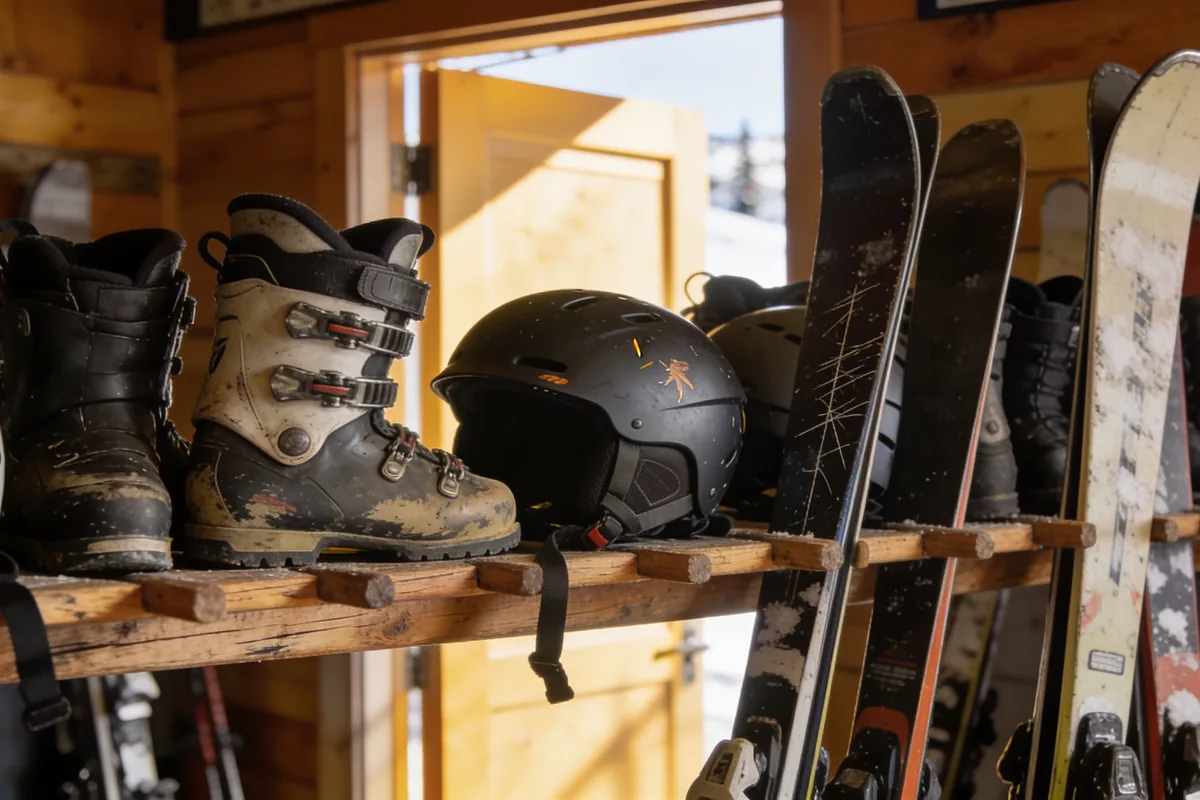
Gear. Hire versus buy, and how much of either. The honest first-trip answer is to hire everything that touches the snow, then own the pieces that touch your skin: base layers, socks, gloves, where fit and hygiene matter and the price of being wrong is small.
Lessons. The one line item a first-timer should not cut. A group lesson on day one provides the fundamentals, a structure and company, and it costs a fraction of private instruction while teaching a beginner most of what a beginner needs. The site’s family guide to packing for a destination with real temperature swings covers the layering logic that makes a lesson easier to enjoy.
Travel. Fuel, park entry, coach transfers and, in some conditions, chains. The costs that appear after the headline price are the same ones the site describes for car hire and its extra fees; read the transport budget the way you would read a hire agreement.
The extras. Food on the mountain, lockers, clothing hire for the one item you did not bring. None of these decides the trip on its own, and together they are where a loose plan quietly spends its money.
| What you pay for | What drives the cost | Where it flexes |
|---|---|---|
| Lift passes | The resort, the number of days, how early you buy | Buy early, ski fewer days, one resort |
| Accommodation | Distance from the lifts, peak versus shoulder | Stay a town down the road, travel midweek |
| Gear | How much you hire, and which pieces you buy | Hire everything on trip one |
| Lessons | Group or private, half day or full | Group lesson on day one |
| Travel | Distance, fuel, park entry, transfers, chains | Coach instead of two cars, share the drive |
| Extras | On-mountain food, lockers, clothing hire | Pack the layers you already own |
One travel requirement belongs on this list as a rule rather than a budget line. Fitting chains, or an approved alternative traction device, is a legal requirement in certain alpine conditions and at certain entry points, and it is enforced. The requirements are set by the state road authority and the resort, and they change with the weather, so check the current rules for the exact road and entry point before you drive, not in the queue at the gate.
What you can skip
The honest half of a cost guide is the part that tells you what not to buy.
Skip the top-of-the-range jacket hire if you already own a waterproof shell; the shell is doing the work, and a mid-range pair of hire pants will not embarrass you. Skip the village for a first trip if you are driving and the budget is paying attention, because the bed is the biggest saving available. Skip the multi-day pass if you have never stood on skis; one or two days is exactly enough to learn whether you love it, and a three-day pass bought in advance cannot be refunded into enthusiasm.
Do not skip the lesson, and do not skip checking the chain rules. Those are the two places where saving money now costs more later.
And one skip that applies only on the way home: the gear shop at the base of the mountain, where a good weekend turns into a wardrobe. If a second trip happens, it will tell you what to buy. The first trip never does.
What the first trip should actually be
Two days, one resort, a lesson on day one, everything hired. That shape is deliberately unambitious. The first day teaches you what you did not know you did not know; the second day lets you use it while it is fresh. One resort means no mid-trip transfer eating a morning. The lesson, group, day one, is the best-spent money of the weekend. Hiring everything means that if it turns out you are not a snow person, the discovery cost you a weekend rather than a wardrobe. This is the version of the trip that answers the only question that matters on a first visit, which is whether there should be a second.
Before you book anything
The mountain asks for almost nothing that the modern world is not already good at: an early booking, a bed down the road, hired gear and a lesson. Do those four things in that order and the trip becomes the calm version, the first queue, where the people look like they have been coming for twenty years. The snow will do whatever it likes. Everything else on the bill was a decision, and every one of them was yours to make before the car was loaded.
Sources: Visit Victoria – Snow and skiing in Victoria · NSW National Parks and Wildlife Service – Kosciuszko alpine area and chain requirements · Perisher and Thredbo – official lift pass and season information · Mount Buller and Mount Hotham – official resort information