Fun & Viral
Kris Kringle With a Wish List Beats the Surprise Gift. How to Run One Fairly
A Kris Kringle runs best on a firm limit and a short wish list. Research backs the list over the surprise; here is how to draw, exclude and opt out fairly.

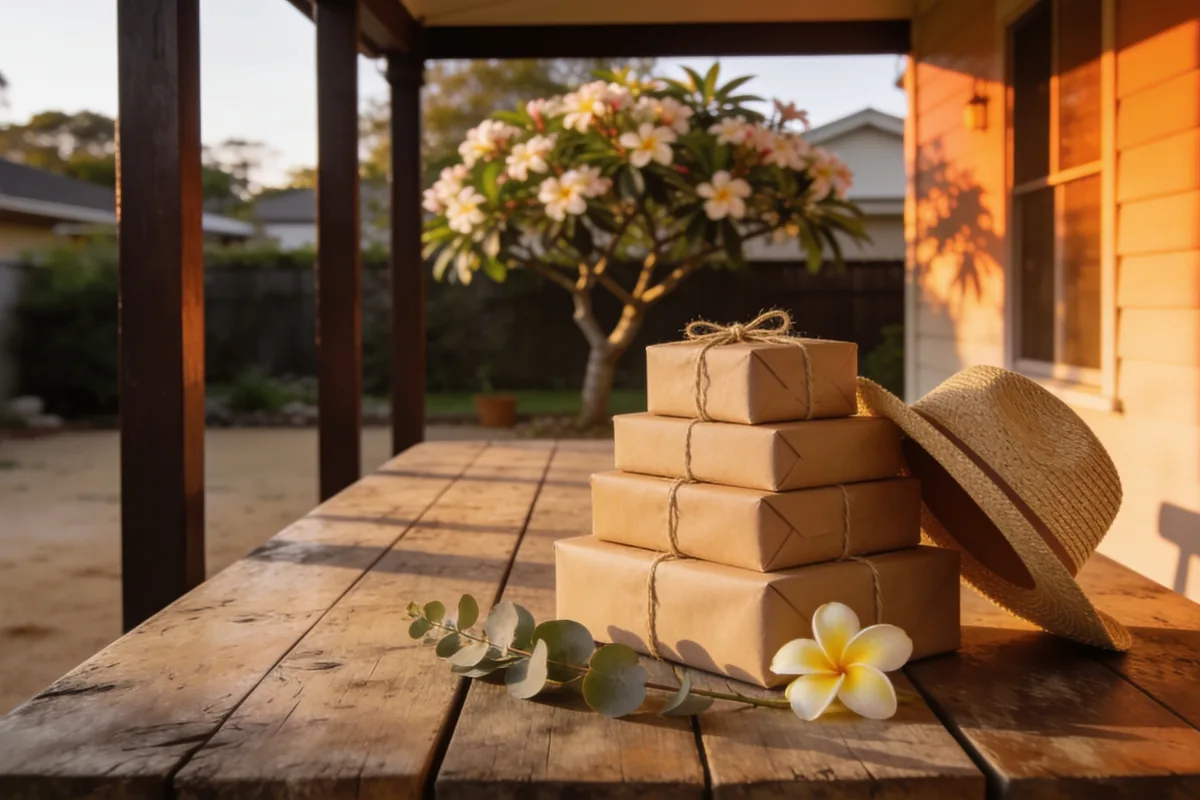
It is a Friday afternoon in the middle of December, and the office kitchen smells of someone’s reheated lunch and a tray of supermarket mince pies going soft under cling wrap. On the bench by the kettle sits the pile: a dozen parcels in mismatched paper, one obviously a bottle, one wrapped so carefully it must be a book, one bulging oddly in a gift bag nobody has managed to close. Names are called. Paper tears. There is the polite laugh, the “oh, you shouldn’t have”, the scented candle handed to the colleague who gets headaches from scented candles.
And there is always one gift the whole room will quietly regret.
Swap the kitchen for a family verandah in Geelong or Toowoomba and the scene barely changes. The plates of prawns are different. The pile is the same. Somebody unwraps a novelty mug and holds it up with the face of a person already planning where it will go in the cupboard.
Worth noticing, though: nothing that happens around that pile is decided in the kitchen or on the verandah. It was settled weeks earlier, when the names went into the hat, and at that moment two small rules would have changed almost everything. Set one firm spending limit. Ask everyone for a short wish list of three ideas inside it, plus a line about what they like. Then buy from the list, unless you know the person well enough to go off it.
That is the verdict of this piece. The rest is how to run a draw that holds up, and if you enjoy the unwritten rules of Australian seasonal rituals, our guide to trick or treat in Australia is a close cousin.
Why the list wins
The appeal of the surprise gift is easy to picture: the giver watching a face light up at something unexpected and perfect. That picture is, it turns out, the problem.
In 2016, the researchers Galak, Givi and Williams published a review in Current Directions in Psychological Science on why gifts so often miss. Their finding, in plain words, is that givers and receivers are paying attention to different moments. The giver is focused on the exchange itself, the unwrapping and the reaction. The person receiving the gift is thinking about afterwards: whether they will actually use the thing, and how often. Because of that gap, givers tend to underrate how much a useful gift is worth to the person who gets it. The researchers’ practical advice was simple. Stick to the registry or the list the person has already made.
A wish list closes that gap. It moves the decision about usefulness to the one person who knows the answer.
The surprise camp has a fair point, and it deserves saying out loud. For a partner, a sister or a friend of twenty years, the surprise is half the fun, and a good guess from someone who knows you is its own kind of gift. So treat the list as a set of ideas, not a shopping order. Going off-list is fine when you know the person well. Online, the common middle ground lands in the same place: the list is guidance, and nobody should be marking the gift against it.
Set the limit first
Before anything else, agree on one number, say it out loud and put it in the group message.
Among Australian office workers talking it over online, budgets tend to cluster between $20 and $30. Families can go higher, especially where the group is smaller and closer. The figure matters less than the fact that it is single, fixed and known. Without one, the pile ends up with a $10 bag of lollies sitting next to a $90 bottle of whisky, and both people feel awkward for opposite reasons.
Word the rule as “spend up to”, never “spend at least”. A question that comes up online is whether a minimum spend is normal, and the answer is no. A minimum pushes the person on the tightest budget into spending more than they can comfortably afford, in December of all months, and that runs against the whole spirit of the thing.
The list that works
A good Kris Kringle list is short. Three ideas, all inside the limit, so the person who draws your name has a real choice without having to guess. Under the three ideas, one line of likes: a colour, a hobby, a favourite snack, a type of book. Under that, one line of “please no”.
That last line is the one people forget, and it does most of the work. Complaints from office gift exchanges come back to the same few misses every year: alcohol given to someone who does not drink, chocolate given to someone who is vegan, scented things given to someone with allergies or a sensitive nose. A “please no” line of five words would have prevented each of them.
Gift cards belong on the list too, if the person wants one. They sometimes get dismissed as lazy, but they fit the same logic as the research above: a gift card is entirely about later use, and the person choosing it has asked for it.
Keep the list somewhere the drawer can find it again, whether that is a shared note, the group chat or a slip of paper tucked into the envelope with the name.
The draw, and the opt-out
Hold the draw by the last week of November. That gives everyone time to read a list, shop without panic and, for families spread across the country, post a parcel before the Christmas rush closes in.
Before the names go in, set the exclusions. Couples and housemates usually should not draw each other, because they are buying for each other anyway, and a draw that pairs them wastes a gift. If you use an online name generator, look for its exclusions setting. A hat works too, as long as someone is willing to redraw.
Then the opt-out, which is where a lot of draws go wrong. Some people do not want to take part, for reasons of money, belief, workload or simple preference, and they should be able to leave quietly. Opting out works best privately, with a short message to the organiser before the draw, no reason needed, and the organiser saying nothing more about it.
A stubborn myth gets in the way here: that one person leaving creates “an odd number” and breaks the game. It does not. Any group of three or more can be drawn so that nobody gets their own name, odd or even, and with the exclusions above it still works for a nine-person family with three couples in it. An opt-out before the draw simply makes the group one smaller.
A worked example across three cities
Picture a hypothetical family of nine. There are three couples and three single relatives, spread between Perth, Brisbane and Hobart. They agree on a $40 limit, mark each couple so they cannot draw each other, and run the draw online on the last Sunday in November. Everyone sends three ideas and a likes line to the group chat by the following weekend.
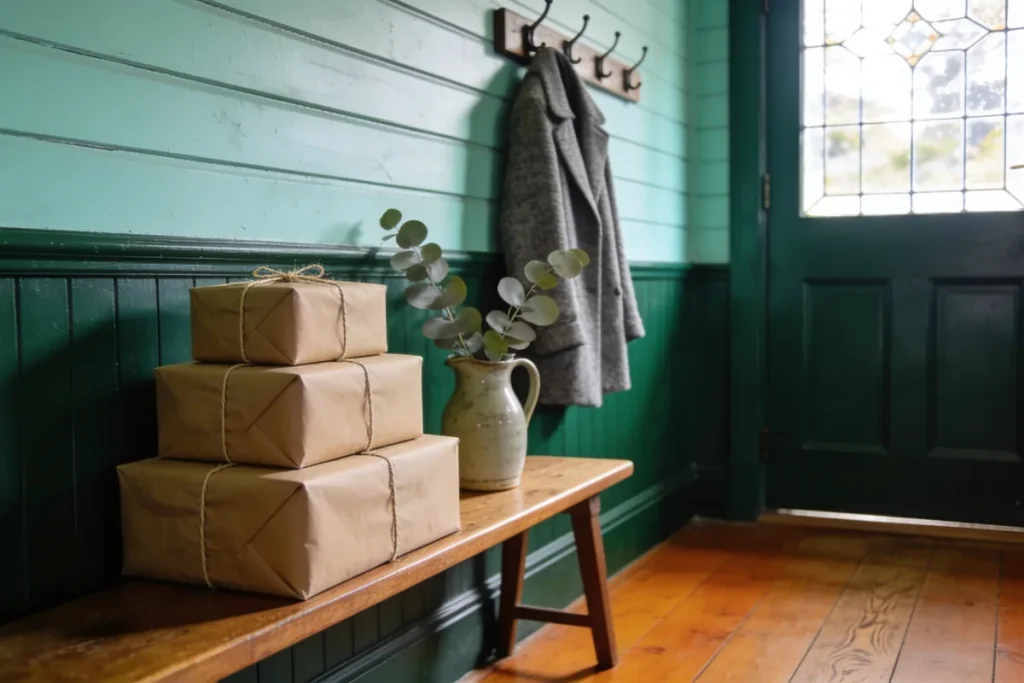
The awkward part is the post. Australia Post’s 2026 Christmas sending dates give these last days for Parcel Post between metro areas:
- Perth to Hobart: Wednesday 16 December
- Hobart to Perth: Wednesday 16 December
- Brisbane to Perth: Thursday 17 December
- Brisbane to Hobart: Friday 18 December
The slowest routes in the family are the two between Perth and Hobart. So the family rule becomes “posted by Monday 14 December”, which leaves a couple of business days’ margin on the tightest lane. Anyone sending from outside a metro area should allow extra time, and Express Post runs later for anyone who misses the date, at a higher price.
Then there is the money. If all nine bought a present for each of the other eight at $25 a gift, each person would spend $200, and the family would wrap, post and unwrap 72 presents. Under Kris Kringle, each person spends $40 and buys one gift. The room still gets nine presents on Christmas Day, every one of them chosen from a list.
That is $160 a head back in the family budget.
The no-show problem
Every draw has the risk of one person who arrives on the day with nothing. It is a familiar complaint whenever people swap stories about workplace gift exchanges online: the colleague who turned up without a present but still took one from the pile, leaving someone else, often the organiser, empty-handed.
Two small rules handle it. First, set a day by which gifts are in, a few days before the party, so the organiser knows where things stand. Second, the organiser keeps one spare inside the limit, something general enough for anyone, like a nice box of biscuits or a plant. If everyone delivers, the spare goes home with the organiser or to a donation tub. If someone does not, nobody is left standing with empty hands.
Kris Kringle, run fairly
A fair Kris Kringle is mostly a matter of decisions made early. One spending limit, worded as “up to”. Three ideas and a likes line from everyone, with a “please no” underneath. A draw by the end of November, with couples kept apart and opt-outs taken quietly beforehand. A posting date for anyone far away, and a spare gift tucked in the cupboard.
Just as useful is knowing what to skip. Skip gag gifts at work, however funny they seem in the shop, because they get opened in front of managers and colleagues you barely know. Skip minimum spends. Skip the draw with no lists at all, unless the group is small and close enough that everyone knows everyone’s taste.
Sources: Research explains why some presents are great to give but not to receive, PsyPost (https://www.psypost.org/research-explains-presents-great-give-not-receive); Christmas sending dates, Australia Post (https://auspost.com.au/sending/christmas-sending-dates)






Fun & Viral
Trick or Treat in Australia: The Street Rules Most People Never Write Down
Halloween falls on a Saturday this year. The trick or treat rules Australian streets follow: decorations as the signal, times, allergies and the houses to skip.

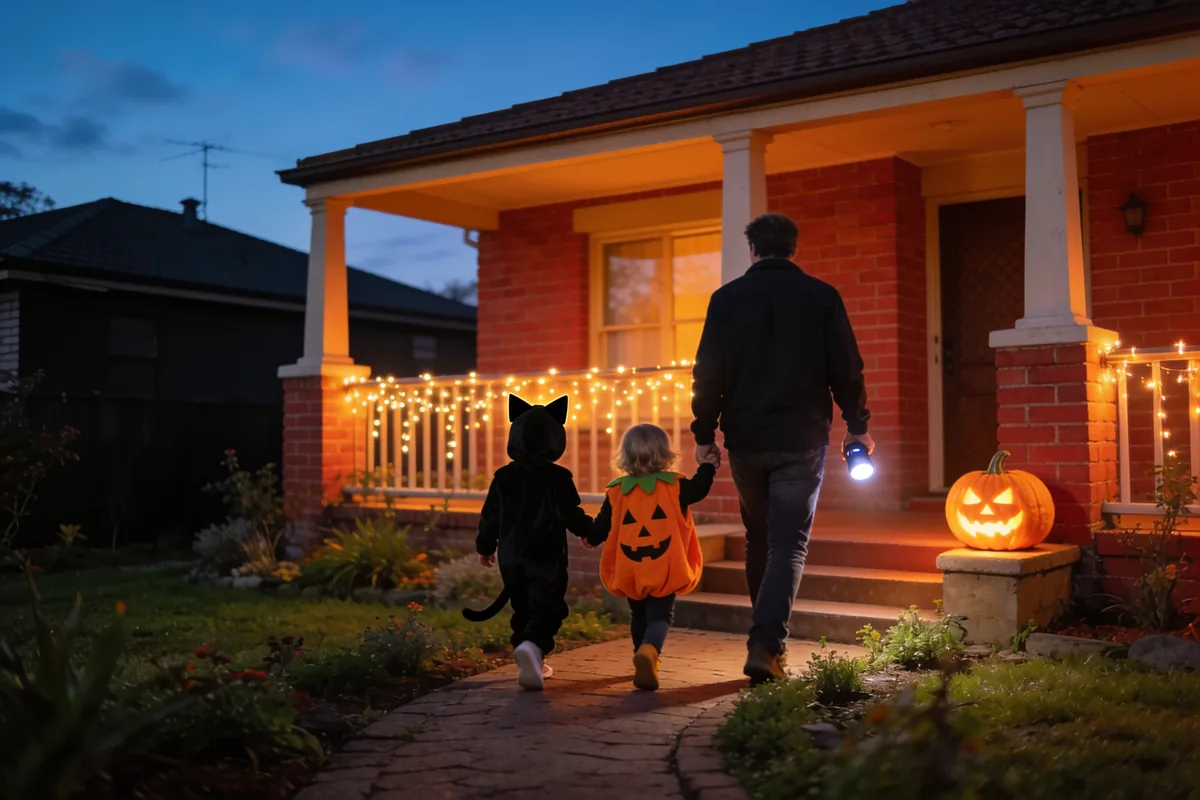
Halloween falls on a Saturday this year, 31 October, and that changes the feel of it. No school the next morning, no rushing home from work, more families out on the footpath while it is still light. If you have a costume half-finished on the kitchen table, or a bowl you are not sure whether to fill, there is a fair chance you are carrying one of two small worries into the week.
If you are the parent, the worry is knocking on the wrong door. You do not want to send a seven-year-old up the path of someone who would rather be left alone, and you are not quite sure how you would tell.
If you are the householder, the worry runs the other way. Perhaps you love the idea of a few small witches at the door. Perhaps you would genuinely rather have a quiet night, and you are anxious about seeming unfriendly, or about disappointing a child, or about the doorbell going every four minutes while you are trying to get the baby down.
Both worries are reasonable, and both come from caring about the people around you. The good news is that Australian streets have settled on a simple answer, and it works for everyone at once. The house decides, and the house says so with its lights.
The signal: decorations and lights
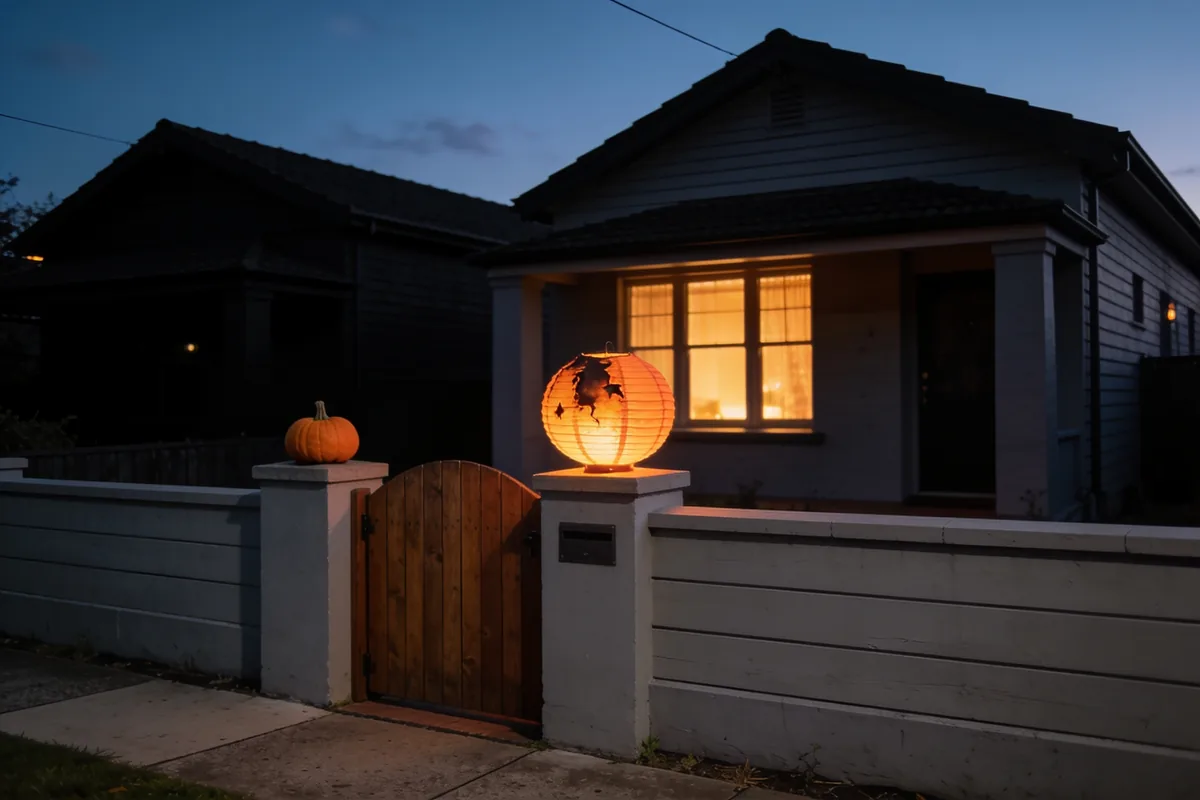
Ask around, in person or in the long online threads that appear every October, and you hear the same thing from every direction. A house with decorations out the front is a house that would like visitors. A house with nothing on the veranda and the porch light off is a house that would rather not be disturbed. Most children, and most of the parents walking with them, know the code without anyone having taught it to them, and they skip the dark houses without a second thought.
You do not have to rely on neighbourhood custom alone, either. Queensland Police has put the same idea into its own Halloween safety advice. It suggests that trick-or-treaters only visit friendly houses with their lights on or a “trick-or-treaters welcome” sign displayed, and that anyone who would prefer not to have visitors leaves their lights off or puts up a “no trick-or-treaters” sign. The service publishes both signs, which you can print and stick to the front door or the gate.
So if you have been wondering whether there is some unwritten rule everyone else seems to know, there is, and now it is written down. It is also kind in both directions. Nobody has to explain anything, and nobody has to feel awkward. You are allowed to simply turn the light on, or leave it off, and trust the street to read it.
For the parent: the walk
Once you know which houses to visit, the walk itself asks for only a little planning. Queensland Police’s advice is practical and easy to follow:
- children go out with a parent, guardian or another responsible adult
- stick to familiar, well-lit streets
- wear reflective clothing, or carry a torch or a glow stick
- stay away from busy traffic areas
A dark costume is lovely right up until a car comes round the corner at dusk, so a glow stick around a wrist or a strip of reflective tape on a cape is worth the small fuss. A torch also helps with uneven paths and the odd garden hose left across a driveway.
One more thing you probably already know, but it is worth saying to the children out loud before you leave: treats are collected at the door, and nobody goes inside a stranger’s home, however friendly the invitation sounds. Children cope well with clear rules that are agreed in advance, and they find it much easier to say “Mum said we stay at the door” than to work out what to do on the spot.
You may be thinking your children are old enough to go without you this year. That is a judgement only you can make, because it depends on your children, your street and who else is out. If you are not sure, walking a few steps behind them, close enough to see but far enough that they can feel grown up, is a gentle middle ground.
Timing
There are no official hours for trick or treating in Australia, and nobody publishes a start or finish time. It is simply not that kind of occasion. What most streets settle into, in practice, is early evening: out around dusk, home before it gets properly late.
The porch light does the timekeeping for you here as well. A house that has had enough, or has run out of lollies, turns its light off, and that is the signal that the night is over for that door. When you notice most of the lights going out, that is a good moment to head home too.
If your little ones are tired after six houses, that is a perfectly good Halloween. It is fine to call it a night early.
Allergies
For a family managing a food allergy, Halloween can look like an evening built entirely around the thing you spend the rest of the year avoiding. It does not have to be.
Allergy & Anaphylaxis Australia says trick or treating can be a safe activity for children with food allergy when a parent or trusted carer is involved. Its suggestions are thoughtful and practical. Some families arrange safe treats in advance with a few trusted neighbours, labelled with the child’s name, so the child gets the thrill of knocking and receiving without anyone having to read a label on the doorstep. Some children are perfectly happy to dress up and walk the street without collecting treats at all, and enjoy the costumes and the lights just as much.
If you are the householder, you can help without being asked. A small bowl of non-food treats beside the lollies, such as stickers or glow sticks, means any child at your door can take something, whatever they can or cannot eat.
You may have seen teal pumpkins or blue trick-or-treat buckets online. Both are symbols that began in the United States, and some Australian families have taken them up. Their meanings are not widely known here, and the blue bucket in particular is one that families feel differently about, so it is not something anyone should feel they must use. The simplest kindness is to treat every child at the door with the same patience, whatever they are carrying and however much or little they say.
For the householder
If you would like visitors, the signal is easy. Turn the porch light on, and put something at the gate or on the step: a carved pumpkin, a string of lights, a cardboard bat. One decoration is enough. Children notice.
If you would rather not have visitors, the signal is just as easy. Leave the lights off at the front, keep the veranda bare, or print the Queensland Police “no trick-or-treaters” sign and put it on the door. That is a complete and polite answer, and you owe no one more than that.
Either way, think about your pets. Queensland Police suggests keeping them secure on the night, and anyone who has a dog that loses its mind at the doorbell will understand why. A dog that is shut in a quiet room with something to work on is far happier than one barking at the front door for two hours; our piece on how puzzle toys stop a dog's destructive chewing has some ideas for keeping one busy and settled while the street is noisy.
And if you are driving anywhere that evening, slow down on residential streets. Small people in dark costumes move in unexpected directions.
The kids who knock anyway
Even on the best-run street, a few children will knock on a dark house. Usually they are very young, or new to the area, or just excited.
If you are the householder and you do not want to take part, you do not need to hide. A friendly “Sorry, we’re not doing Halloween this year, have a lovely night” at the door is enough, and children take it far better than adults expect. You can also choose not to answer, which is equally fine.
If you are the parent and your child has knocked on a house that clearly is not joining in, a simple “Oops, sorry to bother you” and a wave as you head back down the path closes it gently. Then use it as a quiet moment to point out the dark windows, and the child will remember the rule next time.
Nobody owes a treat, and nobody owes an explanation. That goes for both sides of the door.
Lights on, or lights off
That is really all the street asks of you this Saturday. If you are walking, follow the lights, stay together, carry something that glows, and know that going home early is allowed. If you are staying in, choose your answer and let the front of the house give it for you: lights and a pumpkin for yes, darkness for no.
Whichever you choose, you are not being rude and you are not missing out. You are taking part in one of the few neighbourhood customs that runs entirely on goodwill and a light switch, and you are allowed to enjoy it in whatever way suits your household.
Sources: Creepin’ it real this Halloween, Queensland Police Service (https://mypolice.qld.gov.au/news/2025/10/15/creepin-it-real-this-halloween/); Halloween and food allergy, Allergy & Anaphylaxis Australia (https://allergyfacts.org.au/halloween-and-food-allergy/)

An Evaporative Cooler Runs Cheaper Than an Air Conditioner Only While the Air Stays Dry

Before the Kids and the Dog Go In, the Blue-Green Algae Alert Says More Than Clear Water Does

The Law Lets a Child Leave the Booster Seat at Seven, but Most Do Not Fit a Seatbelt Until 10 to 12


 Home & Garden1 year ago
Polycarbonate Roofing: What It Is Good For, and What It Is Not
- Travel1 year ago
Getting Involved in Alice Springs: Clubs, Events and Community Groups
- Healthcare1 year ago
Plantar Warts: The Treatment Ladder, From Patience to Surgery
- Healthcare2 years ago
GP Chronic Condition Management Plans: How Medicare Funds Ongoing Care (the plan formerly called EPC)
- Travel1 year ago
The Ultimate Family Guide to Uluru: Fun Things to Do, Where to Stay & What to Pack
- Healthcare1 year ago
Heel Pain: Five Causes, One Order of Treatment
- Healthcare2 years ago
Laser Treatment for Nail Fungus: What It Involves and What the Evidence Says
- Healthcare2 years ago
The Role of Speech Therapy in Treating Common Speech & Language Disorders