Home & Garden
Christmas Lights: The LED String Runs on a Tenth of the Power
A 100-bulb incandescent string draws about 40 watts; an LED about 4. Here is what that costs over December at 2026-27 default offer rates, and the safety rule.

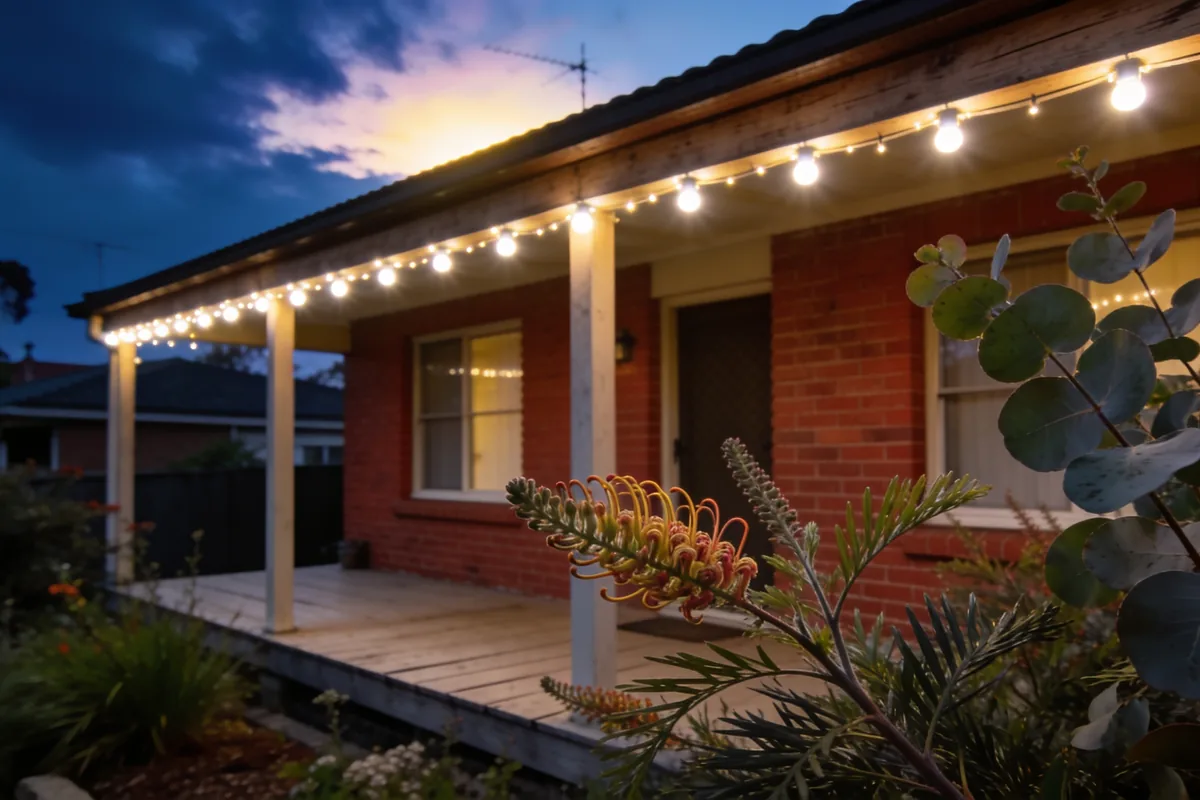
The old bulbs are the story. A 100-bulb incandescent string draws about 40 watts. The LED equivalent draws 2 to 4. Same look, roughly a tenth of the power. That is the whole case for swapping, and it does not depend on the brand or the shop.
Here is the verdict, and it does not change. Buy LED, put the display on a timer, keep every set outdoor-rated, and never join more sets end to end than the label allows. The rest of this piece is the arithmetic behind that, because the cost figures online disagree by a factor of a hundred.
Work out what your lights cost to run
Enter the number of strings, the watts on each string's label, the hours and nights you run them, and the rate from your bill. The result updates as you type.
Enter the strings, the watts on the label, the hours and nights you run them, and the rate from your bill, and the season's cost appears here.
Enter the strings, watts, hours, nights and rate to see the season's cost.
The watts are on the label on the set or the plug. Count every string you plan to run.
The article's table sets out the rates it uses. Your own rate is on your bill. This only does the arithmetic.
Uses only the numbers you type. It does not include supply charges, solar export, time-of-use periods or standby load, and it does not know your tariff or your wattage. Check your bill and the label.
Why the quotes disagree
One guide says a few dollars. Another says about $14 a day. Both can be right, because they are describing different bulbs. Count does not set the load. The bulb does.
A mini incandescent bulb draws about 0.4 watts. Seven hundred of them is 280 watts. A large C9 incandescent bulb draws 5 to 7 watts. Seven hundred of those is 3.5 to 4.9 kilowatts, about twelve to eighteen times the load for the same count. Put either through the same hours and the same tariff and the bills separate the same way.
The $14 a day figure holds for a large C9 display run for long hours on a high tariff. It does not hold when applied to a mini display. A quote that gives a count without a bulb type cannot be checked, and that is the mistake.
Run the figure through the season. Fourteen dollars a day for 30 days is $420. At the Ausgrid rate, that is about 1,267 kilowatt hours, which over 180 hours is a load of about 7 kilowatts. That is a very large C9 display. A mini display is not in that territory, and a quote that uses the C9 number for a mini set is the source of the confusion.
The other two variables are hours and tariff. Six hours a night for 30 nights is 180 hours, which is the season used here. The rates are the AER’s 2026-27 residential flat-rate default offer caps, GST inclusive, in force from 1 July 2026. The table runs three displays through that season on three networks.
| Display | Load | kWh over 180 hours | Ausgrid 33.14 cents | Energex 27.97 cents | SA Power Networks 41.91 cents |
|---|---|---|---|---|---|
| 1,000 mini incandescent | 400 W | 72 | $23.86 | $20.14 | $30.18 |
| 1,000 mini LED | 40 W | 7.2 | $2.39 | $2.01 | $3.02 |
| 700 large C9 incandescent at 5 W | 3,500 W | 630 | $208.76 | $176.24 | $264.03 |
The rates are rounded in the headings; the dollar figures use the published rates. The point of the table is the shape, not the cent. A 1,000-bulb mini display costs tens of dollars for the season. A 700-bulb C9 display costs hundreds. The count is not the load. The bulb is.
Hours are the multiplier that gets left out. Eight hours a night for 30 nights is 240 hours, a third more than the table’s season. The same 1,000-bulb incandescent display would be 96 kilowatt hours, $31.81 on Ausgrid, and the LED version 9.6 kilowatt hours, $3.18. The tariff and the bulb set the rate; the hours set how long you pay it.
The official number and the string number
The Energy Rating website says a good LED uses around 75 per cent less electricity than a halogen and lasts 5 to 15 times longer. The string on the house can do better than that. A 100-bulb incandescent set at 40 watts against an LED set at 4 watts is a 90 per cent reduction.
Both numbers are true, and they measure different things. The 75 per cent is the government’s like-for-like lighting comparison: an LED globe against a halogen globe of similar output. The 90 per cent is a set-to-set comparison at the same bulb count: an incandescent string against an LED string. Neither figure is the number for a particular display. That number is on the label and on the bill.
The common claim of “up to 90 per cent less” is the same comparison at the top of the LED range. At 2 watts per 100 bulbs, the reduction against a 40-watt incandescent set is 95 per cent. At 4 watts, it is 90. The direction is the same; the exact number depends on the set in your hand.
The longevity claim matters to the payback. A set that lasts 5 to 15 times longer needs replacing less often, so the purchase price spreads over more seasons. The running-cost case does not need that argument. The total-cost case does.
The efficiency claim has limits. A cheap LED set can dim or fail early, which is a quality problem rather than a running-cost one. And the saving assumes the same number of strings before and after. Buy more sets because LEDs are cheap and the bill can climb while the efficiency improves.
The general lighting figure compares LED with halogen, a different baseline from the small incandescent bulbs in a Christmas set. The two comparisons start from different lamps, which is why the percentages differ. Neither is wrong, and neither is the number on your bill.
The 75 is a general lighting figure. The 90 is the string. Both hold.
The arithmetic
The formula is the one every running-cost question uses: watts times hours divided by 1,000 gives kilowatt hours; kilowatt hours times cents per kilowatt hour divided by 100 gives dollars. The same method sits behind our air fryer running-cost comparison; the appliance changes, the arithmetic does not.
At 180 hours for 1,000 bulbs: 400 watts is 72 kilowatt hours, which costs $23.86 on the Ausgrid default offer and $30.18 in South Australia. The LED version at 40 watts is 7.2 kilowatt hours, $2.39 and $3.02. The saving is $21.47 on the Ausgrid network and $27.16 on the SA Power Networks rate.
A single 100-bulb string is the small end. 7.2 kilowatt hours for the season, $2.39 on Ausgrid. The LED version is 0.72 kilowatt hours, 24 cents. A real saving, and a small one. This is why the small-display point deserves stating: if the display is one string, the running cost was never the problem.
The middle of the range is where the disagreement matters. Seven hundred mini incandescent bulbs at 0.4 watts draw 280 watts, 50.4 kilowatt hours, $16.70 on Ausgrid for the season. The same 700 bulbs in large C9 at 7 watts draw 4.9 kilowatts, 882 kilowatt hours, $292.27. Same count, same season, a difference of $275 before the cost of the LED replacement.
The same 700 bulbs in mini LED at 0.04 watts each draw 28 watts, 5.04 kilowatt hours, $1.67 on Ausgrid. That is the full range: $1.67 to $292.27 for the same count, depending on the bulb and the set.
A 700-bulb C9 display at 5 watts is the other end. 3.5 kilowatts, 630 kilowatt hours, $208.76 on Ausgrid for the season, before the supply charge. That is the display the online quotes describe when they talk about dollars a day. The wattage is on the label, and the label is the number to check first.
Every figure here is energy only. The daily supply charge on the same default offer is separate, and it applies whether the display runs or not. The energy line is the one the swapping decision changes.
The payback
The payback is honest, which is more than most of the marketing manages. A 500-LED string was listed at about $20 at the major retailers in early November. Two strings, about $40, replace 1,000 bulbs. The saving at the Ausgrid rate is $21.47 a season. Forty divided by 21.47 is 1.86, so the honest number is about two seasons.
One season holds on a large C9 display, where the seasonal saving is $200 or more, so even a replacement set with a real premium clears its cost in the first year. The payback also assumes full retail and the NSW default offer. A cheaper LED set shortens it. A smaller display stretches it.
The calculation uses the full LED purchase price, not the difference between an LED set and an incandescent one. If the old set is already owned, that is the right comparison. If both are being bought new, the LED premium is smaller and the payback is faster.
The other side has a fair point. For one small string, the saving is a couple of dollars a season, and the purchase price takes years to repay. In that case the stronger reasons to swap are safety, longevity and the load on the circuit, not the bill. The running-cost argument is for the display, not for the single strand.
The timer
The cheapest control is a timer. Six hours a night against 10 saves 120 hours over the season. On a 400-watt display that is 48 kilowatt hours, about $16 on the Ausgrid rate. A $10 timer pays for itself in the first season and removes the nightly decision.
Ten hours a night is the other habit: on at dusk, off when the house goes to bed. The extra four hours are the ones nobody watches. They are also the ones the timer removes without anyone having to remember.
A plug-in timer sits between the set and the socket. If it is going outdoors, it needs an outdoor rating. That is the whole installation.
Energy Safe Victoria’s advice is to turn the lights off before bed or before leaving the house. A timer does that without anyone remembering. It also takes the load off the circuit overnight, which matters more than the bill on an old display.
The circuit has its own limit, and it is not the timer’s. Our piece on the load an induction cooktop puts on a circuit explains how household circuits are rated. The same logic applies to a daisy chain of Christmas sets.
The safety rules
The safety rules are short, and they are not optional. Energy Safe Victoria’s advice, plus the label on the set, covers most of it.
- Outdoor sets need an IP rating of at least IP23, and only sets intended for outdoors belong outdoors.
- Look for the RCM mark on new sets, and check the EESS registration on the national register. Insulated pins have been required on appliances sold after 2006.
- Inspect old sets before they go up: cracked insulation, exposed wire, broken lampholders, damaged plugs. Replace them, do not tape them.
- No double adaptors, no piggy-backing plugs, no powerboard plugged into a powerboard. High-powered lamps can overload a circuit.
- Do not exceed the connection limit on the label. It is a current limit, not a suggestion.
- LED, extra-low-voltage (5V, 12V or 24V) or solar sets are the safest options. No lights over pools.
- Turn them off before bed or before leaving.
The IP rating and the compliance marks are worth knowing before the set goes up. The IP rating is a weather rating, not a waterproof one: IP23 keeps out fingers and sprayed water, not immersion, so an outdoor set still stays out of reach of a pool. The RCM is the regulatory compliance mark, and EESS registration puts the set on the national electrical equipment register. The RCM is visible on the product or its packaging; the EESS entry is checked on the register.
The connection limit and the indoor set deserve a sentence each. The connection limit is the one people ignore, because the spare socket is there and the label is small. Owners of large displays online report tripping a circuit breaker with about ten strands of C9; the label’s limit is the one that applies. And an indoor set outside is not a shortcut. The insulation and the plug are not made for weather.
Swap the string, set the timer
Swap the string, set the timer, keep it outdoor-rated, and respect the label. That is the whole advice, and it holds whether the display is one strand or seven hundred bulbs.
What to skip: a large incandescent C9 display bought new, a daisy chain of powerboards, an indoor set on the eaves, and any plan that depends on remembering to turn it off. The display is allowed to cost something. It is not allowed to be a surprise.
The display is the point. A dark house saves the most and gives the street nothing. The argument is for cheaper bulbs and a smaller bill, not for dark houses.
The rest of the Christmas spend works the same way. Our piece on the real or artificial Christmas tree runs the same comparison for the tree: what it costs to buy, what it costs to run, and which one wins over the years. The lights are the easy part.
Sources: Switch and save, Energy Rating, Australian Government (https://www.energyrating.gov.au/consumer-information/products/lighting/switch-and-save); Default market offer prices 2026-27: final determination, Australian Energy Regulator (https://www.aer.gov.au/system/files/2026-05/AER%20-%20Final%20determination%20-%20Default%20market%20offer%202026%E2%80%9327.pdf); Christmas light safety, Energy Safe Victoria (https://www.energysafe.vic.gov.au/community-safety/energy-safety-guides/home-safety/christmas-light-safety); Christmas lights running costs: LED vs solar vs battery, Christmas World (https://www.christmasworld.com.au/blogs/guides/christmas-lights-running-costs)








Home & Garden
An Evaporative Cooler Runs Cheaper Than an Air Conditioner Only While the Air Stays Dry
An evaporative cooler uses less electricity than an air conditioner. That part is settled. Whether it costs less to run depends on two things the brochure leaves out: how dry the air is, and what the water costs.
The verdict is conditional, and it stays that way. In dry air, evaporative cooling is the cheaper machine to run, often by a wide margin. In humid air it stops cooling well, and a low power bill buys nothing. The quoted savings of half, a third or three-quarters are not constants. They come out of the watts you use. Type your own watts, hours and rate into the calculator below and the sum is done.
Compare the running cost of your two coolers
Enter the watts for each unit, the hours and days you run them, and the rate from your bill. Add the water use and water price if you want the water counted. The result updates as you type.
Enter both wattages, the hours and days, and the rate from your bill, and the two running costs appear here.
Enter both wattages, the hours, the days and the rate to see the comparison.
The watts are on the plate or label. For the air conditioner, use the average while it runs, not the full-load figure.
The article's table sets out the rates it uses. Your rate is on your bill. This only does the arithmetic.
Uses only the numbers you type. It does not include supply charges, time-of-use periods, solar export, servicing or purchase cost, and it does not know your tariff, your wattage or your water price. Check your bill and the label.
Why the quoted savings run from half to three-quarters
Every source opened says evaporative cooling uses less electricity. None agrees on by how much. Five are set out below, with the baseline each one measures against.
| Source | Claim | Baseline | Date |
|---|---|---|---|
| energy.gov.au | Less than half the electricity | Air conditioner of similar capacity (ducted evaporative) | Undated page |
| RACV | About half the energy | Similarly sized ducted split system | 19 Nov 2024 |
| CHOICE | $200 to $300 a year against $400 to $500 | Medium-sized air conditioner | 27 Jan 2022 |
| Queensland Government | About one-third the energy | Refrigerated air conditioners | 2025 file, no printed date |
| SolarQuotes | Up to 75 per cent less electricity | Reverse cycle systems | 15 Dec 2025 |
These are not five estimates of one number. They are five baselines. Half, one-third and three-quarters can all be correct if the air conditioner each is compared with draws different watts.
CHOICE’s dollar figures work out at roughly half, although its own text calls the running cost “ultimately comparable to air conditioning”. They also come from a page last updated in January 2022, on tariffs from that period. Use its ratio and its watts. Do not read its dollars as today’s prices.
One installer guide opened for this article gives three different percentages on a single page and states no tariff. A percentage with no baseline cannot be checked.
So treat the ratio as an answer, not an input. It falls out of the watts on each side. That is the next sum.
The sum on three tariffs
Take a hypothetical household. The evaporative cooler draws 350 watts at the fan speed in use. That sits inside the 200 to 400 watts CHOICE gives for evaporative units, and SolarQuotes says “a few hundred watts”. The air conditioner averages 1,000 watts while it runs. CHOICE says a medium unit draws up to about 1 kilowatt, so this is a generous figure for the refrigerated side. Both run 8 hours a day for 30 days. These inputs are ours. They are not a market average.
That gives 84 kilowatt hours for the evaporative cooler and 240 for the air conditioner. The rates are the Australian Energy Regulator’s 2026-27 default market offer caps for flat-rate residential tariffs, GST inclusive, in force from 1 July 2026. Your own rate is on your bill.
| Network | Rate per kWh | Evaporative | Air conditioner | Difference |
|---|---|---|---|---|
| Ausgrid | 33.1372 cents | $27.84 | $79.53 | $51.69 |
| Energex | 27.9744 cents | $23.50 | $67.14 | $43.64 |
| SA Power Networks | 41.9103 cents | $35.20 | $100.58 | $65.38 |
The ratio is 65 per cent less on every network. The tariff moves the dollars. Only the watts move the ratio. Per hour on the South Australian cap, that is about 15 cents for the evaporative cooler against about 42 cents for the air conditioner.
The method is the one behind our Christmas lights running cost sum: watts times hours, divided by 1,000, times the rate. The air fryer against the oven comparison runs on the same logic, where the deciding variable is yours to measure. Here it is your wattage.
Now apply each source’s ratio to the South Australian air conditioner bill of $100.58.
| Ratio used | Source | Evaporative bill it implies |
|---|---|---|
| About half | RACV | $50.29 |
| About one-third | Queensland Government | $33.53 |
| 75 per cent less | SolarQuotes | $25.15 |
The sum above gives $35.20, between the first two. None of the three is wrong. Each sits on a different pair of machines. The ratio is an output.
Humidity decides whether the saving exists
A cheap machine that does not cool is not cheap. Humidity decides which one you have bought.
Evaporative cooling works by evaporating water into the air stream. Dry air takes up that water and the temperature falls. Humid air takes up little, and the temperature falls less. The Queensland Government’s guide puts the best conditions at around 30 per cent humidity and the maximum at 50. SolarQuotes gives a worked example: on a 35 degree day at 30 per cent humidity, indoor air comes down to about 23 degrees. At 60 per cent it may only reach about 30. That is twelve degrees of cooling against five. Expect a cooler room, not a cold one: the Queensland Government suggests aiming for 24 to 28 degrees indoors. CHOICE does not recommend evaporative cooling for humid or wet climates, and Your Home says it works best where humidity is low.
Past 50 per cent the cooler is outside its stated range. It still draws its watts. The power ratio is intact and the cooling is not. That is the worst trade on offer.
The guides share one workaround. On humid days, switch the pump off and run the fan only (Queensland Government, SolarQuotes). That uses the fan’s watts and circulates no water.
Three conditions sit outside the sum. First, the air needs somewhere to go. Your Home says some windows or doors must stay open, and the Queensland Government says to open a window at the far end by 25 to 50 millimetres. Second, a portable unit is a different machine. energy.gov.au says portable units recirculate indoor air and can add humidity and warm the room unless air flows outside. Third, smoke. Your Home says to limit use when outside air quality is low, such as during bushfires.
The other side has a fair point. A reverse cycle system copes with humid days, and it heats in winter. An evaporative cooler does neither.
Dry heat, yes. Humid heat, no.
Water is the cost nobody prices
The electricity sum is half the picture. An evaporative cooler uses water, and the guides do not agree on how much.
Your Home gives about 4 litres an hour for a portable unit and 25 or more for a central unit on hot, dry days. energy.gov.au says up to 25, and RACV gives 25. SolarQuotes says 15 or more, and 15 to 30 or more for a four-bedroom system. The Queensland Government says around 75 litres an hour in summer. CHOICE, citing a 2009 study, reports 41 to 70 litres an hour in Hobart and 67 to 116 in Adelaide. The current guides run from 4 to 75, roughly twenty times apart, and SolarQuotes says more than 100 for a large unit in particularly dry conditions.
Price the water with the same method. Take 25 litres an hour, 8 hours a day, 30 days. That is 6,000 litres, or 6 kilolitres. Every dollar of water price per kilolitre adds $6 to the month. At 75 litres an hour it is 18 kilolitres, and every dollar adds $18.
The useful question is where the saving stops. Divide the electricity saving from the sum above by the kilolitres used and you have the break-even water price per kilolitre.
| Network | Saving on power | Break-even at 25 L/h | Break-even at 75 L/h |
|---|---|---|---|
| SA Power Networks | $65.38 | $10.90 | $3.63 |
| Ausgrid | $51.69 | $8.62 | $2.87 |
| Energex | $43.64 | $7.27 | $2.42 |
Those figures are dollars per kilolitre. If your water price is below the figure in your row, the cooler still wins on this sum. Your water price is on your bill. This article states none, because it varies by supplier and it changes.
At 25 litres an hour the margin is wide. At 75 it narrows to a few dollars a kilolitre. Find your unit’s litres per hour before trusting either row.
Price the water, or the sum is half done.
What the refrigerated side really draws
The 1,000 watt figure is the one to question. An air conditioner’s nameplate shows its maximum draw, and the unit does not sit there. CHOICE says a medium unit draws up to about 1 kilowatt, and around 500 watts while cycling.
Change the input and the answer moves. At 500 watts for the same 240 hours, the air conditioner uses 120 kilowatt hours and costs $50.29 on the South Australian cap. The evaporative cooler at $35.20 now saves $15.09. That is 30 per cent, not 65. Same machines, same tariff. This is why the calculator asks for average watts while running, not the full-load figure.
The Energy Rating label is the better source. It shows annual electricity use in kWh for the Hot, Average and Cold bands, and its factsheet says to multiply that by your tariff to estimate running costs. Read the band for your climate.
The evaporative side has gaps of its own. CHOICE says some units draw 2 kilowatts or more, and Your Home says many have inefficient or large fans. Ducted units with inverter fans use much less power, according to energy.gov.au. Read the plate for the fan speed you actually run.
The plate is a ceiling. Use the average.
What the sum leaves out
The sum is energy only. It leaves out the daily supply charge, which applies whether either machine runs. It leaves out time-of-use tariffs, which can charge a different rate in the late afternoon, when cooling runs hardest. It leaves out solar. SolarQuotes says that for a home with a sufficiently sized solar system a reverse cycle air conditioner is likely the better choice.
It leaves out the machines themselves. RACV’s guide of 19 November 2024 lists evaporative units at $2,500 to $6,000, with ducted installation from $2,300 to $5,000 or more. Split systems run $500 to $2,000 or more, with installation averaging $600 to $800. Those are different systems, so compare quotes for your own house, not these rows. SolarQuotes puts an annual service at $250 to $350.
A view that turns up in online discussion is that pads, pumps and water eat into the saving. The guides back part of it. Water is priced above, and a yearly service is a real line on the ledger. Neither sits in the electricity lines, so those results are the best case, not the full bill.
Then there is winter. Your Home says built-in evaporative units can raise heating bills, through the ducts. Our guide to draught-proofing and where your heat escapes covers what to seal and what not to.
Your Home also names a ceiling fan as the first choice, ahead of either machine. No typical bill is given here. There is no honest one.
Count the watts, then check the air
Dry inland air and a dry heatwave: choose evaporative, and run the sum on your own watts to see the saving. A humid coast: choose refrigerated air. A cooler that cannot cool is the dearest option. Where both kinds of day turn up, keep the fan-only setting for the humid ones.
Reverse cycle has a fair claim too. It heats and it handles humidity, and SolarQuotes rates it the likelier better choice for a home with enough solar. That is a different sum, and the calculator above does not run it.
Before buying or switching, run the calculator twice: once with the wattage you expect, once with the wattage you fear. If the answer survives both, the saving is real.
Skip ratios from a brochure. Skip a portable unit in a sealed room. Count the watts, check the air, price the water.
Sources: Heating and cooling, Your Home, Australian Government (https://www.yourhome.gov.au/energy/heating-and-cooling); Heating and cooling, energy.gov.au (https://www.energy.gov.au/households/heating-and-cooling); How to be waterwise: evaporative coolers, Queensland Department of Local Government, Water and Volunteers (https://www.dlgwv.qld.gov.au/__data/assets/pdf_file/0005/1407560/residential-evaporative-air-coolers.pdf); Default market offer prices 2026-27: final determination, Australian Energy Regulator (https://www.aer.gov.au/system/files/2026-05/AER%20-%20Final%20determination%20-%20Default%20market%20offer%202026%E2%80%9327.pdf); How to read the new energy rating label for air conditioners, Energy Rating (https://www.energyrating.gov.au/sites/default/files/2022-12/Factsheet%20How%20To%20Read%20The%20ZERL%20For%20Air%20Conditioners.pdf); Evaporative coolers vs air conditioners, CHOICE (https://www.choice.com.au/home-and-living/cooling/air-conditioners/articles/evaporative-cooler-vs-air-conditioner); Best air conditioner, RACV (https://www.racv.com.au/royalauto/living/at-home/best-air-conditioner.html); Evaporative cooling vs reverse cycle air conditioning, SolarQuotes (https://www.solarquotes.com.au/blog/air-conditioning-evaporative-rcac-mb/)
Home & Garden
Swapping Gas for Induction Starts at the Switchboard, Not the Cooktop
Swapping a gas cooktop for induction can mean a dedicated circuit or a switchboard upgrade. What to check first, which pans work and what Victoria now requires.
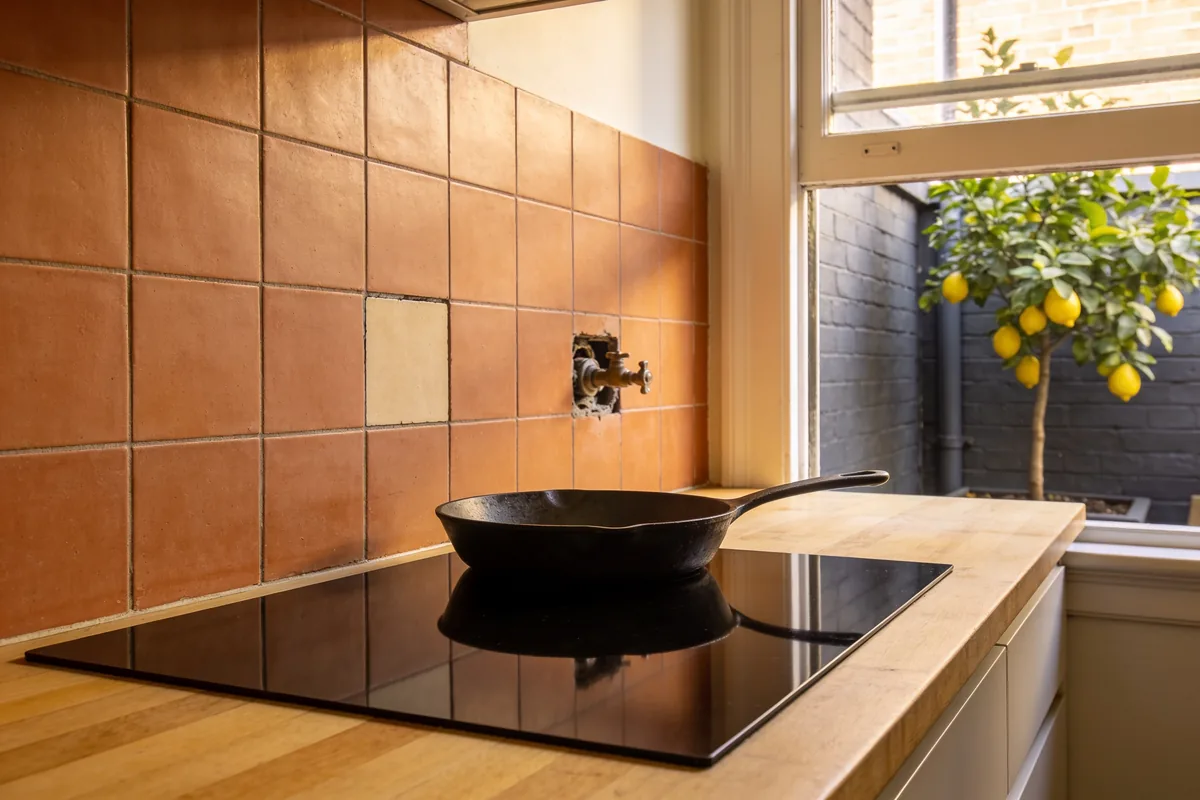
The cooktop is the cheap decision. The circuit behind it is the expensive one.
Most households leaving gas spend weeks comparing induction cooktops and about five minutes thinking about the wiring. That order is backwards. Any decent induction unit will boil water faster than the burner it replaces and wipe clean in seconds. Whether the house can power it without new cabling, a new breaker or a new switchboard is what decides the final bill, and only an electrician can answer that.
So the order of operations is fixed. Electrician first. Benchtop second. Pans third. Cooktop last.
Why the circuit matters
An induction cooktop draws serious current. Energy Victoria’s buyers guide puts typical cooking zones at between 1,600 and 3,000 watts each, with boost functions pushing a single zone above 4,000 watts. Run three zones for a Sunday breakfast and the load adds up fast.
The consequence is stated plainly in the same guide. Most good-quality induction cooktops need more than 15 amps, which is above what common residential power circuits are built to supply. They are usually hardwired by a licensed electrician, and the job may involve running a new dedicated circuit from the switchboard, or upgrading the switchboard itself if there is no room or capacity left in it.
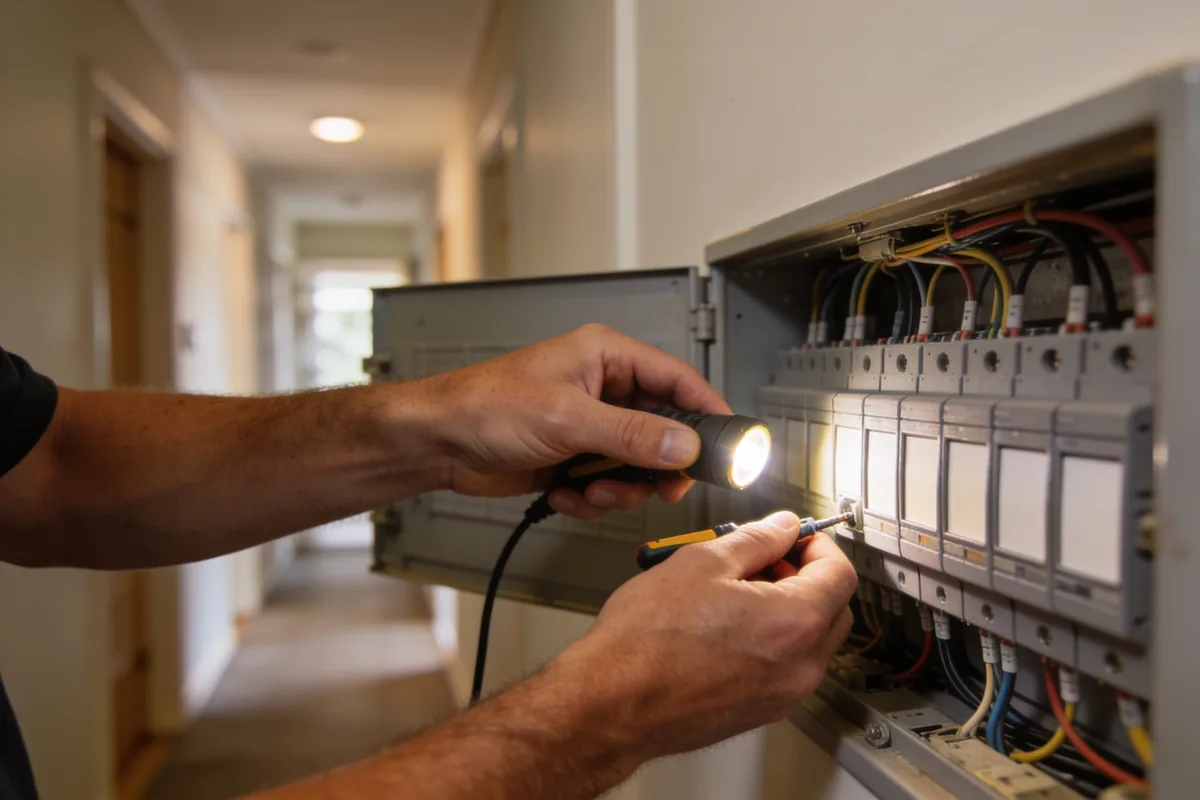
That is the variable that moves the price. A house with a modern board and a spare circuit already run to the kitchen, perhaps left over from an old electric oven, can be a short job. A house with an older board, no spare capacity and a kitchen at the far end of the hallway is a different job altogether. Same cooktop, very different invoice.
Two pieces of reassurance from the guide. Single-phase power is adequate for most homes. Three-phase is rarely needed. Anyone told otherwise should ask why.
Then there is the claim that circulates online: that you can replace a gas stove with induction and plug it into a normal wall outlet. Partly true. Some plug-in models exist, and YourHome notes that lower-power induction models are available. Energy Victoria adds the catch: a plug-in unit on a shared circuit can trip it when other appliances are running at the same time. A cooktop that cuts out whenever the kettle and the dishwasher run is a poor trade for a cheaper installation. The plug-in route suits some kitchens and some cooks. It is a compromise, and it should be chosen as one.
Pans: the magnet test
Induction heats the pan, not the glass. It does that through magnetism, which means the pan has to be made of something a magnet will stick to.
YourHome lists what works: cast iron, mild steel, and most stainless steel, though not all of it. The base has to be ferrous. Anything else stays cold. Plenty of pans are sold with an induction symbol on the base. Where there is no symbol, the test costs nothing. Hold a fridge magnet to the bottom of the pan. If it grips firmly, the pan will work. If it slides off or barely holds, it will not.
Run that test across the whole cupboard before buying anything. Most kitchens turn out better than expected. Cast-iron frypans and many stainless saucepans pass easily. The failures tend to be the old aluminium stockpot and the non-stick pan that came free with something.
Two more points from YourHome. Match the pan to the zone, because a small pan on a large zone wastes most of the zone. And a round-bottomed wok will not sit properly on flat glass. The options are a flat-bottomed wok or a cooktop with a dedicated sunken wok zone. Anyone who cooks stir-fries most nights should settle this before choosing the model, not after.
The pan bill is real but bounded. Replace what fails the magnet test, and only what gets used.
The benchtop cut-out
The hole in the benchtop is the other hidden constraint, and it bites hardest in renovated kitchens.
YourHome points out that induction cooktops come with clearance dimensions that must be respected, and that matching a new unit to the cut-out left by an old gas cooktop can be difficult. Gas and induction units rarely share exact dimensions. A new cooktop slightly larger than the old hole means cutting the benchtop. A smaller one means filling a gap.
Then the material question. YourHome notes that engineered stone may no longer be cut. In Victoria, modifying an installed engineered stone benchtop is still permitted, but only as high risk crystalline silica work by a qualified tradesperson using dust controls and respiratory protection, so ask a stonemason before assuming the cut-out can be enlarged. A household with that benchtop is choosing from the cooktops that fit the hole it already has, or it is choosing a new benchtop. Those are very different budgets.
Measure the cut-out. Write the dimensions down. Take them shopping. A cooktop that does not fit the hole is the most expensive cooktop in the shop.
What Victoria’s rules require
A good deal of the pressure to switch comes from a vague sense that gas is being banned. In Victoria, the rules are specific, and they mostly concern new homes and hot water.
According to Planning Victoria’s information on the state’s Gas Substitution Roadmap:
- from 1 January 2024, new gas connections are being phased out for new homes that require a planning permit, under planning scheme amendment VC250 and clause 53.03
- from 1 January 2027, all new homes must be built all-electric
- from 1 March 2027, gas hot water systems in existing homes must be replaced with an electric system at the end of their life
- there is no change to existing gas cooking in existing homes
That last line is the one that matters for this decision. Nobody is forcing the cooktop out of an existing Victorian kitchen. The gas cooktop that works today can keep working.
The reason to move, then, is the household’s own: easier cleaning, a cooler kitchen in summer, or a plan to take the whole home electric over time. The last of those is where the hot water rule becomes relevant, because a house replacing its gas hot water with electric is one step closer to having the cooktop as its only gas appliance. Draught-proofing and efficient heating tend to sit in the same plan; our guide to finding where your heat escapes covers the cheapest part of it.
Make the decision for your own reasons. The rule people fear does not exist for existing kitchens.
The cost, honestly
The total has three parts. The cooktop. The electrical work. Any replacement pans.
The cooktop is the part that gets compared. Prices vary widely between models, but it is the most predictable line on the bill because it is on a price tag. The pans are the smallest part for most households, once the magnet test has shown how few need replacing. The electrical work is the line that varies most, because it depends entirely on what the electrician finds at the board and along the path to the kitchen. Get that quote first, and treat any cooktop price as incomplete until the quote is in.
Running costs are a separate question and easy to overstate. What a household pays depends on its electricity tariff, what it cooks and how often, so a single per-meal figure would be a guess dressed up as a fact. The same logic applies to every kitchen appliance. Our piece on whether an air fryer is cheaper to run than an oven shows how the answer changes with the cooking itself, and the method carries over.
One question is worth putting to the household’s own bill. Once the cooktop is the last gas appliance in the house, what is the gas connection costing just to stay connected? Look at the supply charge on the next gas bill and set it against how much cooking that connection is supporting. For some households the answer settles the whole decision.
Discounts
Victorian households can access discounts on eligible built-in induction cooktops through the Victorian Energy Upgrades program, which Energy Victoria runs. This article quotes no amounts, because they are set by the program and can change. Check its current conditions before signing a quote, and confirm with the installer that the cooktop and the job qualify.
Outside Victoria, check what your own state offers. Do not assume either way.
One safety line
Energy Victoria advises that anyone with a pacemaker or other medical implant should speak to their doctor before using an induction cooktop. Induction works through a magnetic field, and the question is a medical one, not a sales one. Ask before buying.
Call the electrician first
The sequence is the whole method.
Book an electrician to look at the switchboard and the kitchen circuit. Find out whether the house needs a new dedicated circuit, a switchboard upgrade, or nothing at all. Get that in writing.
Measure the benchtop cut-out, and note what the benchtop is made of. Engineered stone narrows the field.
Run a magnet across every pan. Keep the ones that grip.
Then shop for the cooktop, with the circuit capacity, the cut-out dimensions and the wok question already answered. Skip the brochure comparisons until those three facts are known. They decide more than any feature list.
Induction is a good cooktop. The swap is only as good as the order it is done in.
Sources: Induction cooktop buyers guide, Energy Victoria (https://www.energy.vic.gov.au/victorian-energy-upgrades/products/induction-cooktop-discounts/induction-cooktop-buyers-guide); Appliances and technology, YourHome (https://www.yourhome.gov.au/energy/appliances); Victoria’s Gas Substitution Roadmap, Planning Victoria (https://www.planning.vic.gov.au/guides-and-resources/strategies-and-initiatives/victorias-gas-substitution-roadmap)
Home & Garden
Planning a Patio, Pergola or Carport Roof: What to Sort Out Before You Order
Approvals, wind classification, beam spans and drainage all need settling before you order a roof. Here is the order to work through a patio or carport project.

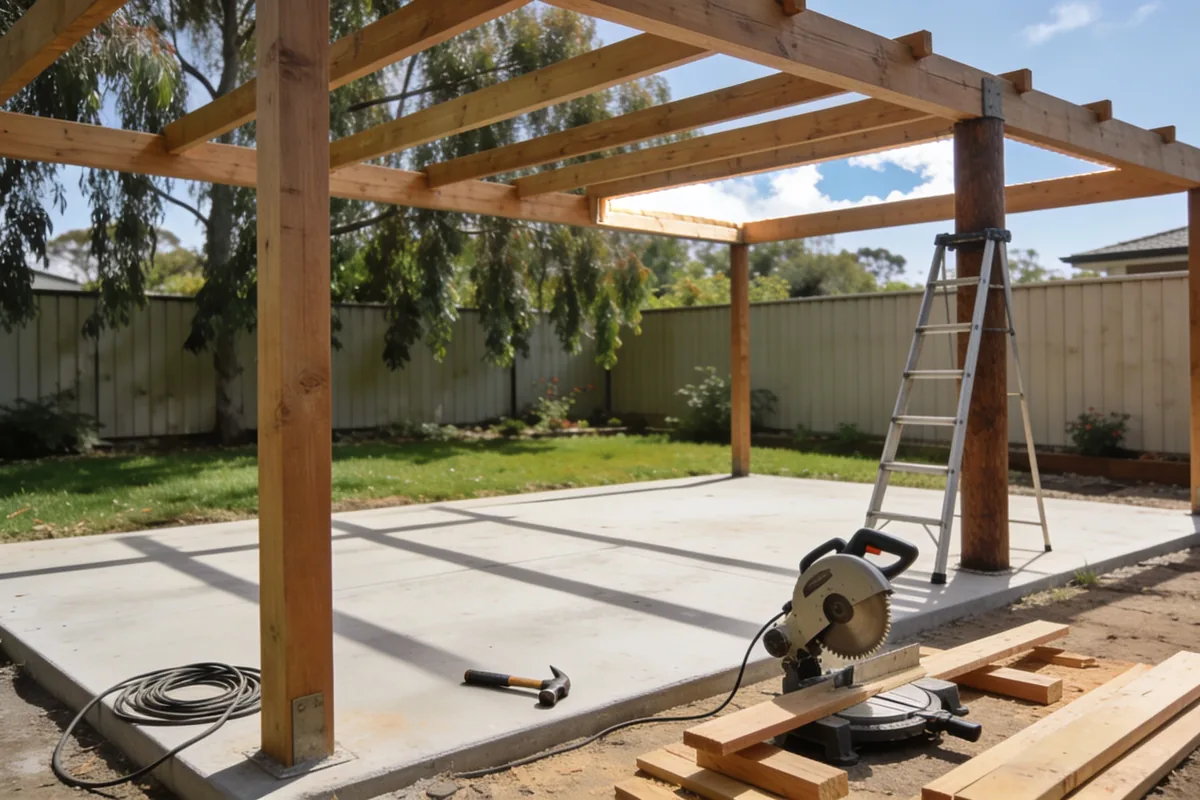
Outdoor roof projects go wrong in a predictable order. The homeowner picks a style, orders materials and books an installer, and only then discovers the site needs a building permit, the wind classification calls for heavier fixings, or the roof’s drainage has nowhere lawful to discharge. By that point the materials are on site and the budget is committed.
The order that works is the reverse: settle the questions first, and order only when each one has an answer. This guide sets out the questions that actually decide the project.
First, Check What Approvals You Need
Whether a patio, pergola or carport needs approval depends on the structure, its size, its setbacks and the rules where the property sits. In most cases a roofed structure attached to a house, or a carport, will require a building permit, and some projects and locations also require planning approval. Structures close to boundaries, larger pergolas, and anything in a bushfire-prone or heritage area attract additional considerations.
The check itself is straightforward: ring the council’s planning or building department, or engage a building surveyor, and describe the project including size, height, setbacks and location. Do it before paying a deposit. Approval conditions can change the design, and a design change after ordering is the most expensive way to learn this.
Wind Classification Matters More Than the Style
Every site in Australia has a wind classification, determined under the National Construction Code and the standards it references, based on the region, the terrain and the surrounding features. The classification sets how strong the structure has to be: the fixings, the post spacing, the beam sizes and the way the roof is tied down.
This is the detail that separates a structure that lasts from one that lifts in its first storm. A coastal site, an exposed hilltop or a property with long open ground on the windward side can carry a different classification from a sheltered suburban backyard a few streets away, and the two projects need different specifications even when the two roofs look identical. A supplier or installer working from the address and site conditions should be able to show how the classification was determined. A quote that does not mention it is a quote built on an assumption.
The Structure Comes Before the Roof
The choice of roof material and the design of the frame are connected, in that order of dependency. Different roof materials carry different weights, and the span between posts determines the beam sizes that can carry the roof across it. Choose the roof first and the frame has to be designed around it; design the frame first and some roof options are eliminated on structural grounds.
For anything beyond a small pergola, the span and loading questions should be answered by someone who can show the numbers: a licensed builder, an engineer, or an installer backed by engineering documentation for their system. The span tables and fixing details that come with a manufactured system are only valid for the wind classification and spans they cover, and stepping outside those limits voids the very documentation being relied on.
Drainage: Decide Where the Water Goes
A roof that collects water has to send it somewhere lawful and sensible. On an attached structure that usually means gutters and downpipes connected to the property’s stormwater system, not discharged over a fence, into a neighbour’s yard, or onto a garden bed where it will undermine the posts over the years.
Two questions to answer at the planning stage: is there capacity in the existing stormwater to take the additional roof area, and does the downpipe route cross anything that needs moving? On larger roofs and smaller sites, a rainwater tank can answer both the capacity question and the waste of watching free water run away, if it is placed and plumbed to suit.
Who Is Licensed to Do What
Outdoor structures involve more than one trade, and more than one responsibility:
- Permit work needs the right practitioners: a registered building practitioner for design and construction, and a building surveyor for the permit and inspections where they are required
- Stormwater connection and drainage work must be done by a licensed plumber
- Any electrical work, including lights or fans under the roof, must be done by a licensed electrician
- The roofing system’s installation instructions have to be followed for its warranty to stand, which is worth confirming with whoever fits it
Checking licences before work starts, not after, is the habit that prevents problems. The registers make it easy, and a professional expects the question.
The Questions to Settle Before You Order
- Does the project need a building permit, planning approval, or both?
- What is the wind classification for this site, and what specification does it require?
- What span will the frame carry, and are the beams and posts sized for it?
- Where will the stormwater go, and can the existing system take it?
- Who is pulling the permit and arranging inspections?
- Which licensed trades are needed, and who arranges them?
- What does the warranty cover, and what does it require of the installation?
- How will materials reach the site and be lifted into place?
Each answer is a sentence. Together they decide whether the project proceeds smoothly or becomes a story about a roof that had to be rebuilt twice.
Settle the Details Before You Order
The structural questions are not the glamorous part of an outdoor project. They are, however, the part that decides whether the roof performs for decades or creates problems that outlast the novelty of a new space. Settle the approvals, the wind classification, the spans and the drainage first. Ordering is the easy part once those have answers.
Sources: National Construction Code, wind classification guidance; state and territory building authorities, approval guidance for domestic structures.

An Evaporative Cooler Runs Cheaper Than an Air Conditioner Only While the Air Stays Dry

Before the Kids and the Dog Go In, the Blue-Green Algae Alert Says More Than Clear Water Does

The Law Lets a Child Leave the Booster Seat at Seven, but Most Do Not Fit a Seatbelt Until 10 to 12


 Home & Garden1 year ago
Polycarbonate Roofing: What It Is Good For, and What It Is Not
- Travel1 year ago
Getting Involved in Alice Springs: Clubs, Events and Community Groups
- Healthcare1 year ago
Plantar Warts: The Treatment Ladder, From Patience to Surgery
- Healthcare2 years ago
GP Chronic Condition Management Plans: How Medicare Funds Ongoing Care (the plan formerly called EPC)
- Travel1 year ago
The Ultimate Family Guide to Uluru: Fun Things to Do, Where to Stay & What to Pack
- Healthcare1 year ago
Heel Pain: Five Causes, One Order of Treatment
- Healthcare2 years ago
Laser Treatment for Nail Fungus: What It Involves and What the Evidence Says
- Healthcare2 years ago
The Role of Speech Therapy in Treating Common Speech & Language Disorders