
Family & Parenting
The Law Lets a Child Leave the Booster Seat at Seven, but Most Do Not Fit a Seatbelt Until 10 to 12
The law lets a child leave the booster seat at seven. Most children do not fit an adult seatbelt until 10 to 12. State rules, the five-step test and the review.

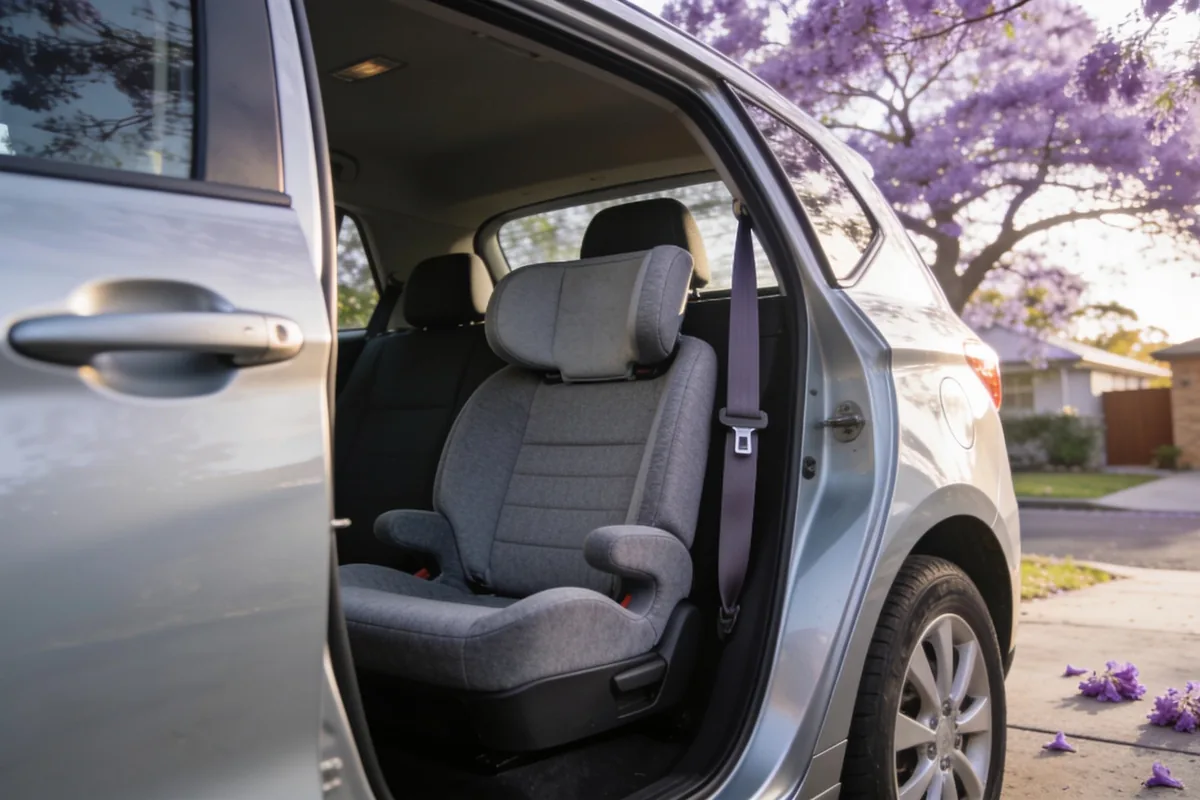
The birthday is coming, and you have started doing the sums. Seven means the booster comes out, doesn’t it? A few of the other children are already travelling on the seatbelt alone, your child has mentioned it twice this week, and somewhere under your cheerful “we’ll see” sits a small private question: am I overdoing this?
You are in good company, and the answer is a kind one. Leaving a booster seat at seven breaks no law in most of the country, and keeping your child in one for longer is a sensible choice that the official advice backs. The law marks the earliest point a child may leave. The official advice from the states and the National Transport Commission (NTC) marks the point where most children fit, and for most that is somewhere between 10 and 12.
Below you will find the rules state by state, where the number seven came from, a five-step test you can do in your own car, and a plain account of what is under review and what has not changed.
What the law says, state by state
Every jurisdiction uses the same age, but each words it differently, and the wording matters. Here is each official page set beside its own advice. Quotation marks mean the words are the page’s own.
| Jurisdiction | What the law allows from 7 | What the official page recommends |
|---|---|---|
| NSW | The legal minimum age for leaving a booster is 7 (Transport for NSW) | Five-step test |
| Victoria | Rule 266A(5), Road Safety Road Rules 2017, quoted in the coronial finding: 7 to under 16 may use an approved restraint, a booster with belt, or a seatbelt | Safest to stay until good belt fit, around 10 to 12 (TAC); belts designed for 145 cm and over (Better Health Victoria) |
| Queensland | “Legally, children aged 7 and up can sit in a normal seat with an adult seatbelt and can travel in the front seat” (Queensland Government) | Stay until shoulders pass the top marker; back seat until 12; most children not big enough until 11 or 12 |
| South Australia | 7 up to 16: an approved restraint, or a properly adjusted and fastened seatbelt (SA.GOV.AU) | Restraint to match age and size |
| Western Australia | Seatbelts page: children aged 7 and up “must use a child restraint unless they can wear an adult seatbelt properly”; Road Safety Commission parents page says they “should remain in a suitable child restraint until” they pass all five steps | Five-step test |
| Tasmania | 7 and older: a properly fastened forward-facing seat or adult seatbelt (Department of State Growth booklet, December 2019) | Continue in a booster until tall enough; most need one to 10 to 12 |
| ACT | Under 7 must use an approved restraint; 7 or older “should continue to use a child restraint suitable for their size” (Access Canberra) | Suggested minimum 145 cm and five-step test |
| NT | Under 7 must use an approved restraint or booster; the NT page says passenger seats “can be used by children older than 7 years of age who have outgrown their car seat” | Back seat first |
The middle column shows different sentences about one birthday. Queensland says “legally”, and Western Australia words it around whether an adult seatbelt can be worn properly. The right-hand column is much tighter: every page points to fit rather than age.
If your state’s wording seems harder to read than it should be, you have plenty of company, and the right-hand column is the one to follow. This is general information, so check your own state’s page before you decide.
Why the number is seven
Knowing where seven came from takes some of the sting out of the gap. The NTC’s 2025 issues paper explains that the age was set when booster weight limits of 26 kg left about a third of children over seven outside them.
Seats have moved on since. The NTC notes that boosters now go to about 8 (type E8) or about 10 (E10 and F). The law is a floor set in an older era, and the seats have since moved past it. When you keep your child in a booster, you are using what the seats can now do.
Age and readiness part ways in other parts of a child’s life too. Our guide to swimming lessons by age covers another place where the number on the birthday cake and the child in front of you do not always match.
The five-step test, in the car you drive
This part is for doing rather than reading. The five steps appear on the Transport Accident Commission, South Australian, Western Australian and Tasmanian pages and in the NTC paper. Do it with your child sitting in the car you use, because the NTC points out that fit differs between cars, since rear seats and belts differ.
With your child seated normally and no booster, check five things:
- Their back sits all the way against the seat.
- Their knees bend comfortably over the front edge of the seat.
- The sash runs across the middle of the shoulder.
- The lap belt lies across the top of the thighs.
- They can stay that way for the whole trip.
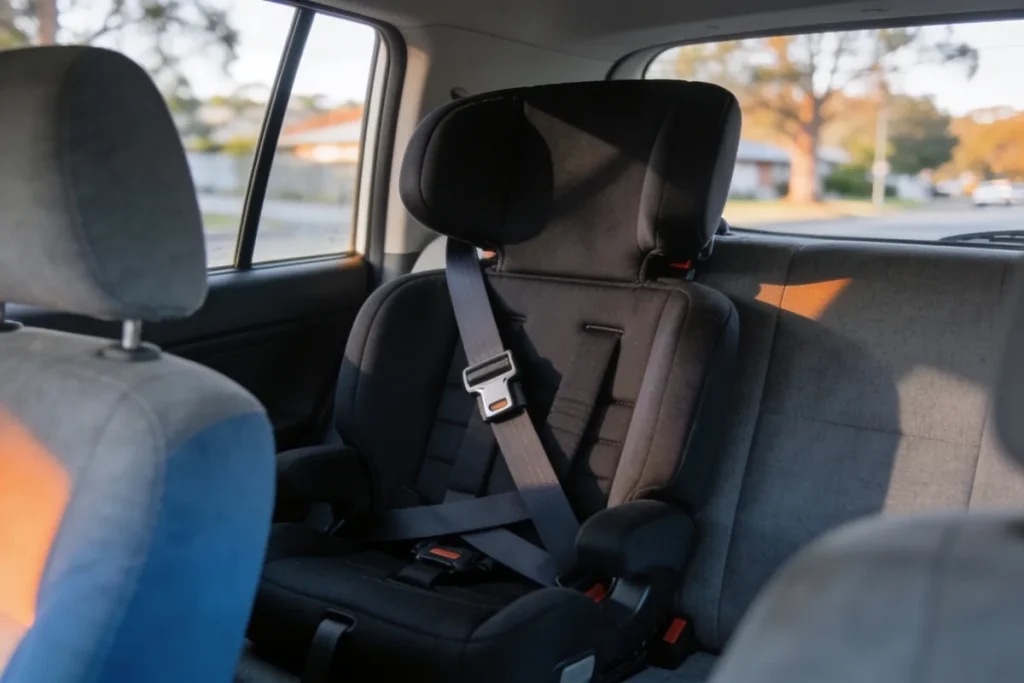
If the sash sits on the neck, the answer for now is not yet. That is a measurement. Your child has failed nothing, and you have done nothing wrong. The belt was built for a slightly bigger body, and with time it may fit.
I will not put a figure on how long that takes, because it depends on your child and on your car. A child may pass all five steps in one car and miss step three in another, and that happens often enough to be unremarkable. If you drive two cars, test in both. The test in the car you drive is the one that counts.
Where 145 cm comes from
You have probably seen 145 cm quoted as the height at which a child can use an adult belt. It is a useful number with a limited job, so it helps to see what the sources say about it.
Victoria’s Better Health page says an adult lap-sash belt “is designed for people who are a minimum height of 145 cm”. The ACT calls it a “suggested minimum height”. The 2020 NRA and Kidsafe guidelines, quoted in the Victorian coronial finding, call 145 to 150 cm a simple guide. None of these sources treats 145 cm as law, and the NTC says that age or height alone is “problematic” as a test, because rear seats and belts differ from car to car.
Use 145 cm as a quick guide to when the five-step test is worth doing. A child can reach it and still miss step three in a particular car, and a child a little under it may pass. The test settles it.
When the seat runs out before the child fits
Two limits are worth watching, and one of them belongs to the seat. The Queensland Government says to keep a child in the booster until their shoulders have passed the top marker. Once the marker is reached, the seat has done its job and the question becomes whether the child passes the five steps.
Sometimes the marker has been passed and the test still fails. That happens, and the answer is practical. A child in that position needs a bigger seat. Boosters now exist that go to about 10 (NTC), so it is worth checking what is available for larger children before assuming the next stop is the bare seatbelt. If you are unsure, the Transport Accident Commission page points to child restraint fitting stations, where someone can look at your child and your car together.
Some parents say that tall children outgrow their seats sooner than the range of larger boosters seems to allow for. It is a fair complaint, and it makes the fitting-station route more useful.
What may change
At the time of writing, nothing has changed in the law. The NTC has opened a review. Its issues paper, published on 27 October 2025, started a consultation that ran until 19 December 2025. A second round is planned, and transport ministers are expected to consider the work in late 2026.
The options on the table include raising the age at which a child may use an adult seatbelt to 8 or to 10, or defining “good seatbelt fit” in the rules by the five-step test itself. The paper also asks about the age at which children should sit in the front seat. If you read an article announcing a “new rule”, it is wrong, because the review has not finished. Check your own state’s page for the current wording.
In April 2026, a Victorian coroner’s finding said that a child travelling in an adult seatbelt alone should have been seated in an appropriate booster seat, and asked for a review of similar cases. It is part of why the question has had more attention lately, and it points to the same advice every official page gives: stay in the booster until the belt fits.
A law that sets a floor and leaves the judgement to the household is a familiar arrangement. The under-16 social media ban is another, where the rule marks a minimum and families still decide how to manage what sits above it. For booster seats, the household judgement now has a fair test to rest on.
The other side has a fair point. A child who passes all five steps in your car may leave the booster lawfully and sensibly. A child who has outgrown the seat’s marker belongs in a bigger seat, or out of it once the belt fits. The goal is a belt that sits where it should.
When your child wants out
This is likely the hard part, because the request is reasonable from where they sit. They are watching friends move on, and a booster can feel like a baby thing at seven or eight. A few small permissions can help.
You can tell them the seat is a belt-fit tool and the belt is what decides. You can let them do the five-step check with you, so the answer comes from the test rather than from you. And you can tell them what happens when they pass: the booster goes, because the test said so.
It is okay if this takes a few rounds of the conversation. It is okay if the answer is “not yet” again next term.
Until the seatbelt fits
Seven is the earliest the law lets a child out of a booster in nearly every state, which makes it a floor and leaves the leaving to fit. Keep your child in until they have outgrown the booster, meaning their shoulders are past the top marker, or until they pass the five-step test in the car you drive. For most children, that is 10 to 12.
Leave the birthday out of it as a deadline. Check the belt, check the car, and when it fits, it fits.
Sources: Child car seats, Transport for NSW (https://www.transport.nsw.gov.au/roadsafety/parents/child-car-seats); Rules for child restraints, Transport Accident Commission Victoria (https://www.tac.vic.gov.au/road-safety/road-users/parents/child-restraints); Child safety in the car, Better Health Channel Victoria (https://www.betterhealth.vic.gov.au/health/healthyliving/child-safety-in-the-car); Child restraint laws in Queensland, Queensland Government (https://streetsmarts.initiatives.qld.gov.au/?p=9986); Seatbelts and child restraints, SA.GOV.AU (https://www.sa.gov.au/topics/driving-and-transport/roads-and-traffic/seatbelts-and-child-restraints); Seatbelts and Parents, Road Safety Commission Western Australia (https://www.wa.gov.au/organisation/road-safety-commission/seatbelts and https://www.wa.gov.au/organisation/road-safety-commission/parents); Car Seat Safety, Department of State Growth Tasmania, December 2019 (https://transport.tas.gov.au/?a=112582); Seatbelts, Access Canberra (https://www.cityservices.act.gov.au/roads-and-paths/road-safety/seatbelts); Child car seats, Northern Territory Government (https://nt.gov.au/emergency/child-safety/child-car-seats); Review of child restraint requirements in the Australian Road Rules: issues paper, National Transport Commission, 27 October 2025 (https://www.ntc.gov.au/sites/default/files/assets/files/NTC%20Review%20of%20child%20restraint%20requirements%20in%20the%20Australian%20Road%20Rules%20-%20Issues%20paper_1.pdf); Improving child restraint rules, National Transport Commission (https://www.ntc.gov.au/project/improving-child-restraint-rules); Finding into death without inquest, Coroners Court of Victoria, 20 April 2026 (https://coronerscourt.vic.gov.au/sites/default/files/COR%202024%20000090%20Form%2038%20-%20Finding%20into%20Death%20without%20Inquest_Signed.pdf)




Family & Parenting
Five Metres by Six, Fifty by Twelve: Swimming Lessons Measured by Age
Swimming lessons by age, measured against Australia’s national benchmarks: what a child should manage at 6, 12 and 17, and what keeps under-fives safe.
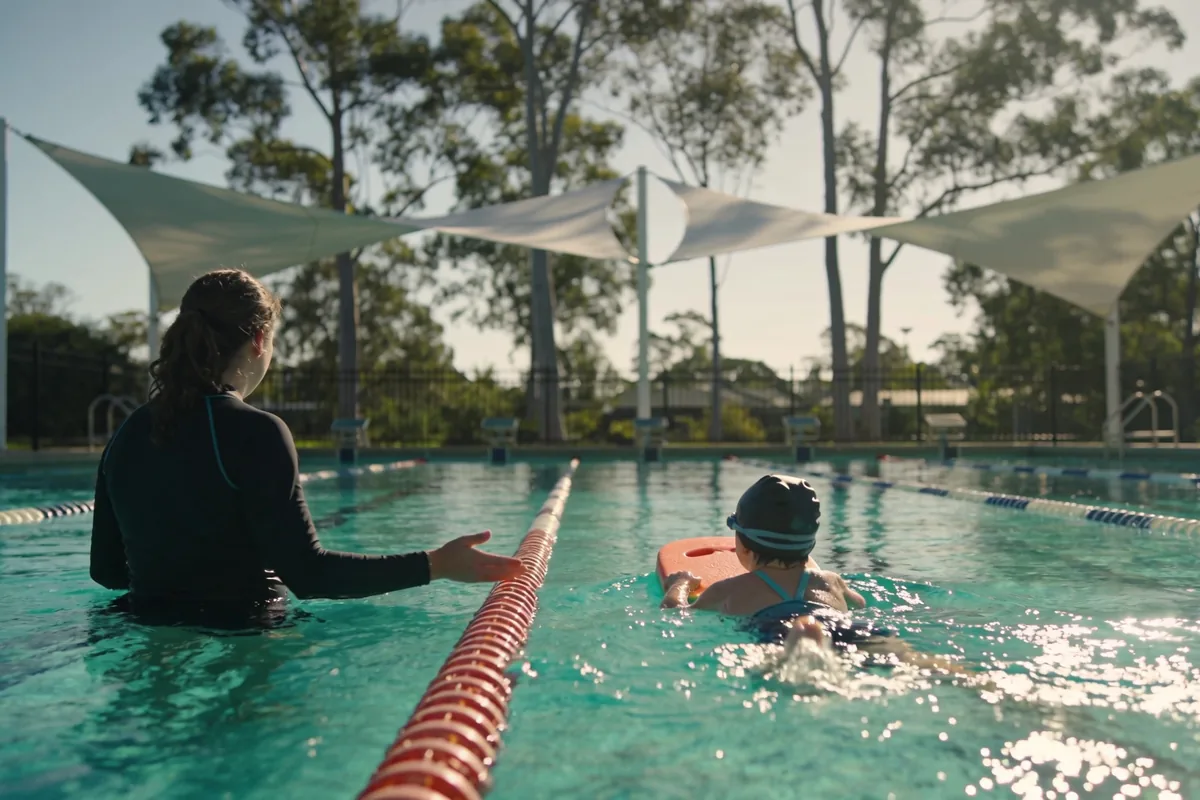
The weather has turned, and suddenly you notice water everywhere: the neighbour’s pool behind the side fence, the gate that sometimes needs a push before it latches, the beach trip pencilled in for January. And a child who, whenever anyone asks, “can swim a bit”, which sounds reassuring right up until you try to picture what it means.
If you have been typing “what age should swimming lessons start” into your phone late at night, you are in good company. It is one of the questions parents ask most at this time of year, and it comes from exactly the right place. The trouble is that a start date tells you very little about what your child can do on the day they slip off the step.
A more useful question sits underneath it: what can my child do in the water right now, and is that what a child of this age should manage? Australia has an answer to the second half. Royal Life Saving’s national benchmarks set out what a child should be able to do by 6 and by 12, with a further aim for 17, and the checklist below gathers them in one place, with the basics for under-fives at the top. Tick what your child can do today. Whatever is left becomes your plan for the summer.
Water skills by age: a checklist
0 of 15Under 5 (for the parent)
By 6
By 12
By 17 (national aim)
Benchmarks: Royal Life Saving Australia, National Swimming and Water Safety Framework.
Under five: lessons help, watching saves
Start with the youngest, because this is usually where the worry lives.
Lessons for little ones can be lovely. They get a child used to water on the face, to getting in and out safely, to the idea that the pool has rules. They cannot make a toddler safe on their own, though, and a good instructor will tell you so. For a child under five, the protection is an adult who is watching.
Royal Life Saving’s Keep Watch program puts it in four actions: Supervise, Restrict, Teach, Respond. Supervise means an adult within reach and paying attention whenever a young child is near water, rather than glancing up from a phone between messages. Restrict means a pool fence that does its job and a gate that closes and latches by itself, checked rather than assumed. Teach is where lessons and water familiarisation come in. Respond means someone in the house knows CPR and could start it.
Of the four, supervision matters most. It is also the one that slips most easily, because it feels so ordinary.
The latest numbers are encouraging, and they are a reminder as well. According to the Royal Life Saving National Drowning Report 2026, drowning deaths among children under five fell to 11 in 2025/26, which is 39% below the 10-year average. That is real progress, and families and pool owners earned some of it. The same report found that 55% of those deaths happened in backyard pools. That is the part to sit with, because it puts the risk close to home, on ordinary afternoons.
Timing matters too. Keep Watch figures show that 35% of drowning deaths among young children between 2015 and 2025 happened from December to February. Summer is when pools are full, visitors arrive, routines loosen and gates get propped open for the esky. So the start of summer, which is right about now, is the moment to walk your fence line, swing the gate and watch it close.
Holidays deserve the same care. Holiday-park pools, resort pools and a friend’s backyard all change the layout your eyes are used to. If you are planning a trip with little ones, say a family holiday to Uluru, agree before you arrive whose turn it is to watch, and hand over out loud when you swap.
You might be wondering whether you have left lessons too late, or started them too early. I am not going to give you an age, because that depends on your child, your family and what is on offer near you, and anyone who names one right age for every child is guessing about your household. What I can tell you is that at this age the lessons are the extra layer and the watching is the layer you keep. So give yourself some credit for the watching you already do.
By six: five metres and a calm head
The first national benchmark arrives at six. By then, Royal Life Saving’s framework says a child should be able to:
- swim continuously for at least 5 metres
- submerge and move through an obstacle
- identify people and actions that can help in an aquatic emergency
Five metres does not sound like much. Picture it, though: roughly the distance from the side of a backyard pool to the steps, or from a slip on the edge to the nearest thing to hold. It is a distance that gets a small child back to safety.
Going under and moving through something is about comfort. A child who panics when water closes over their head has a hard time doing anything useful in the seconds that follow. The third skill is about knowing what to do: who to call, who to fetch, and that you fetch a grown-up rather than jump in after a friend.
You can try the first one yourself on a quiet afternoon at the local pool. Stand five metres from the wall and see what happens. If your six-year-old is not there yet, that is information rather than failure, and it tells you where the next term of lessons should point.
By twelve: fifty metres and a plan
The second benchmark comes at twelve, and the skills grow up with the child. By this age, the framework says, a child should be able to:
- tread water for 2 minutes
- swim 50 metres continuously
- rescue someone using a non-swimming rescue with a non-rigid aid
- perform a survival sequence wearing clothes
Notice how practical that list is. Two minutes of treading water is long enough to stay up while help comes. Fifty metres without stopping is a real swim, the kind that gets a child back from further out than they meant to go. Helping from the edge, with something soft to throw or hold out, is the skill that stops one emergency turning into two. And the clothes are there because nobody slips off a jetty in their bathers.
Twelve is also the age when children start going places without you: a pool party at a friend’s house, a river weekend with cousins, a school camp. These skills go with them when you cannot.
By seventeen: an aim, not a bar for everyone
The framework also describes what it hopes a 17-year-old can do:
- tread water for 5 minutes
- swim 400 metres
- rescue an unconscious person in deep water
- perform a survival sequence in heavy clothing
This one is framed differently, and it is worth being clear about how. The framework aims for half of all Australians to reach this level, so it reads best as something to work towards through the teenage years rather than a test every teenager is expected to pass. If your fifteen-year-old reads the list and rolls their eyes, fine. If they read it and quietly realise they could not swim 400 metres, that may be the more useful conversation.
Where children fall off the ladder
This is the part I most want you to hear, because it is where good intentions tend to fade.
Royal Life Saving found that 75% of children stop swimming lessons before the age of 9. In 2024 it also reported that 40% of children leaving primary school are missing the water safety benchmarks, and that the drop-off comes between the ages of 8 and 10.
It makes sense when you think about how family life runs. By eight, most children can get themselves across the pool. Sport, music and homework start competing for the same afternoons, lessons start to feel finished, and the ladder simply stops somewhere between the first rung and the second. Nobody decided it. It just happened, the way so much of family life does, one busy term at a time, and it is no reflection on how much you care.
You may be thinking your child is a confident swimmer and none of this applies. Perhaps it does not. The checklist is a gentle way to find out, because confidence in a warm pool with a lane rope to grab is different from 50 metres without stopping, or two minutes treading water with nothing to hold. If the boxes tick, wonderful. If some do not, the years between 8 and 10 are where keeping going pays off, and you are allowed to keep going even when it feels like the job is done.
Before the first hot weekend
Three small steps, and all of them fit into this week.
Check the gate. Walk your pool fence, or the fence at whichever house your children swim at most, and make sure the gate closes and latches by itself every single time.
Book the term. Term 4 is when families book ahead of summer, and places fill. You do not need the perfect program, only the next one, pointed at the skill your child is missing.
Try the benchmark. Take the checklist to the local pool on a quiet weekend morning and see where your child is today: five metres, fifty metres, two minutes treading water. Make it a game rather than an exam, and let them show off a little.
If your summer includes the beach, perhaps a Gold Coast trip chasing sunshine, take the same habits with you. Open water asks more of every skill on the list than a backyard pool does, and the watching matters just as much on the sand.
You do not have to fix everything before summer arrives. You only need to know where your child is on the ladder, and help them up one rung. That is enough, and it can start this weekend.
Sources: Royal Life Saving Australia, National Drowning Report 2026 (https://www.royallifesaving.com.au/library/national-drowning-report/national-drowning-report-2026); Royal Life Saving Australia, National Swimming and Water Safety Framework (https://www.royallifesaving.com.au/about/news-and-updates/news/2020/aug/framework); Royal Life Saving Australia, 40% of children are missing water safety benchmarks (https://www.royallifesaving.com.au/utility-navigation/media-centre/media-releases/media-release-40-of-children-are-missing-water-safety-benchmarks); Royal Life Saving Australia, Keep Watch (https://www.royallifesaving.com.au/about/campaigns-and-programs/keep-watch)
Family & Parenting
Exploring the Role of Respite Care in Supporting Foster Families and Children
Planned short breaks give foster carers room to recover and keep placements stable. Here is how respite works, who provides it and when families use it.


Foster carers give children something most of us take for granted: a home that stays the same while everything else is changing. It is also demanding work, and it does not pause to let the carer rest.
Respite care exists for exactly that reason. It gives foster families a planned, supported break, and it gives the children in their care continuity at the same time. This guide explains how it works, who arranges it, and when families usually use it.
What Is Foster Parent Respite Care?
Foster parent respite care provides temporary, planned care for a child in foster care, so the primary carers can take a short break. A break might be a few hours, an overnight stay or a weekend, depending on the child’s needs and the arrangement with the agency.
It is not a step away from the placement. Respite is a support that helps the placement continue, giving carers time to rest, attend to their own responsibilities or simply recharge, knowing the child is safe and well cared for.
Who Arranges and Funds Respite for Foster Carers
This is the part that confuses many families, because most information about respite online is written for NDIS participants, which is a different system.
In Australia, respite for foster carers is arranged through the state or territory child protection system, working with the fostering agency that manages the placement. The agency approves the break, matches the child with a respite carer, and handles the funding arrangements. If a child in care also has NDIS funding of their own for disability supports, that is arranged separately and does not replace the foster care pathway.
The practical first step is always your agency. Ask what respite options are available, how much notice is needed, and how the child’s needs are matched to a respite carer.
Why Respite Care Is Important for Foster Families
Fostering often involves caring for children who have experienced trauma, loss or instability, and the work is emotional as well as practical. Without reliable support, fatigue builds quietly and eventually affects the whole household.
Respite care helps by:
- Reducing stress and preventing burnout
- Protecting carers’ mental and emotional wellbeing
- Helping families keep healthy routines
- Strengthening the placement over the long term
Carers who come back from a break refreshed are better equipped for the work, and children feel the difference.
How Respite Care Supports Foster Children
Respite is not only for the adults. When a break is handled well, with a trained and familiar carer, it can be a positive experience for the child.
Children benefit through:
- Continued stability in their care
- Positive social interactions
- A lower risk of placement breakdown
- Building trust with additional carers
The quality of the match matters most. Good respite keeps the child’s routine, comforts and boundaries the same as at home, so the stay feels predictable rather than unsettling.
When Might Foster Families Use Respite Care?
Every family’s situation is different, and there is no wrong reason to ask for a break. Respite is commonly used for:
- Planned holidays or family events
- Health appointments or recovery time
- Managing work or study commitments
- Preventing carer exhaustion
Some families use it regularly, a weekend every few months, as maintenance. Others use it once during a hard stretch. Both are valid.
Choosing the Right Respite Arrangement
Effective respite depends on good matching, proper training and clear communication. Work with your agency early, so the respite carer understands the child’s background, routines and emotional needs before the first stay.
Ask what happens if the child needs more support than expected, how medication and appointments are handled, and how the respite carer will keep you updated. A short, well-planned stay is worth more than a long one that leaves everyone anxious.
Strengthening the Foster Care System Through Support
Respite is part of a sustainable foster care system. Carers who are supported early tend to keep caring for longer, which means fewer placement changes and better outcomes for the children in their care. Supporting foster families well is how the system keeps the families it needs.
Respite Is Support, Not a Last Resort
Foster parent respite care is not a luxury, and asking for it is not a sign that a placement is failing. It is a practical support that keeps good carers in the role and gives children continuity. If you have been putting off asking, start with your agency and find out what is available. The break is there to be used.
Sources: state and territory foster care authorities; Department of Social Services, respite guidance.

An Evaporative Cooler Runs Cheaper Than an Air Conditioner Only While the Air Stays Dry

Before the Kids and the Dog Go In, the Blue-Green Algae Alert Says More Than Clear Water Does

The Law Lets a Child Leave the Booster Seat at Seven, but Most Do Not Fit a Seatbelt Until 10 to 12


 Home & Garden1 year ago
Polycarbonate Roofing: What It Is Good For, and What It Is Not
- Travel1 year ago
Getting Involved in Alice Springs: Clubs, Events and Community Groups
- Healthcare1 year ago
Plantar Warts: The Treatment Ladder, From Patience to Surgery
- Healthcare2 years ago
GP Chronic Condition Management Plans: How Medicare Funds Ongoing Care (the plan formerly called EPC)
- Travel1 year ago
The Ultimate Family Guide to Uluru: Fun Things to Do, Where to Stay & What to Pack
- Healthcare1 year ago
Heel Pain: Five Causes, One Order of Treatment
- Healthcare2 years ago
Laser Treatment for Nail Fungus: What It Involves and What the Evidence Says
- Healthcare2 years ago
The Role of Speech Therapy in Treating Common Speech & Language Disorders