Eco Friendly
Reuse or Recycle: Get the Order Right and Household Waste Drops
Reuse or recycle? Compare what each option really saves, where contamination sends a good load to landfill and the habits that make reuse worth it at home.

Why Reuse Comes First
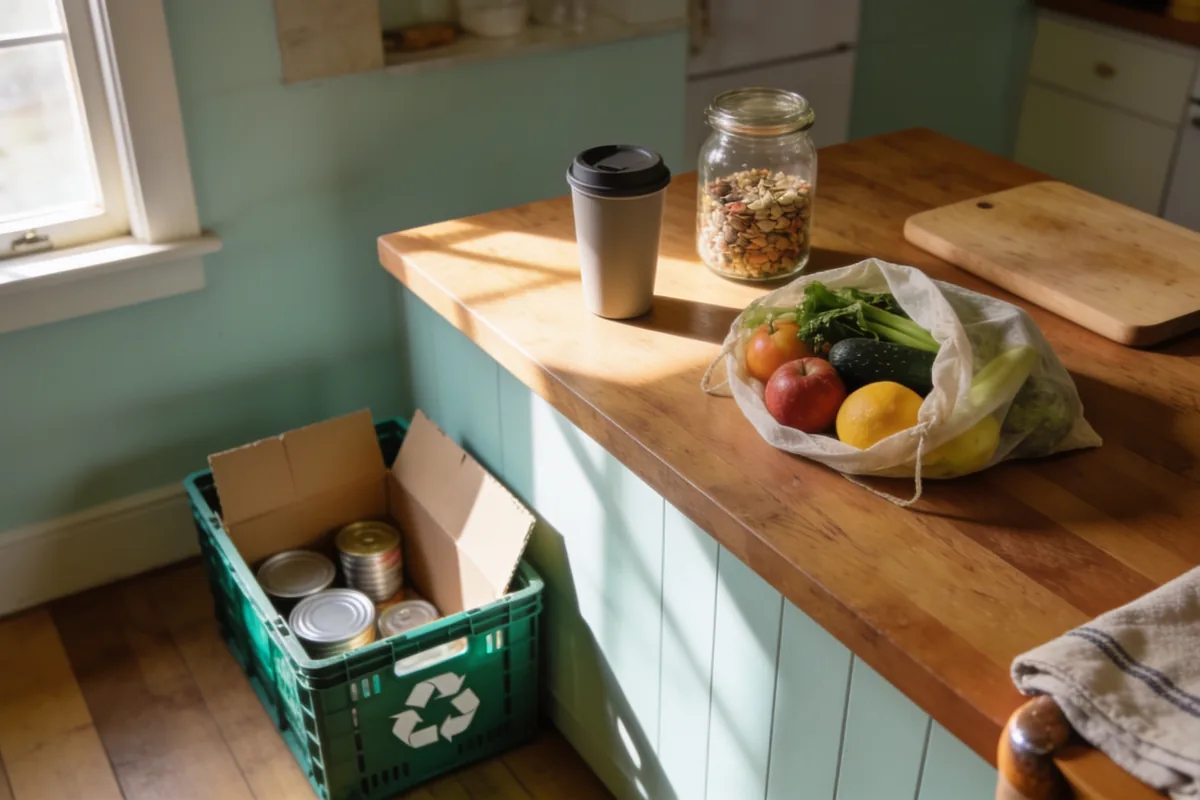
Reuse first. That is the short answer, and it is not close. A keep cup used every day stands in for hundreds of takeaway cups over a year, and the best waste is always the waste you never create. Recycling is what happens to the things you cannot avoid or reuse. It is not a licence to buy more.
That does not make recycling pointless. It is the backstop that keeps cans, bottles and cardboard in circulation instead of in landfill. The trouble is that the recycling bin has been sold to households as the finish line when it sits near the end of the line. Get the order right, and household waste drops.
Understanding the Basics
Reusable items are made to be used many times: stainless steel bottles, cloth bags, lunch boxes, keep cups. Recyclable items are designed to be processed into something new: aluminium cans, plastic bottles, cardboard boxes.
Both cut waste, but they cut it differently, and the difference decides which one you should reach for first.
| Aspect | Reusable items | Recyclable items |
|---|---|---|
| What they are | Made to be used many times, such as stainless steel bottles, cloth bags and keep cups | Designed to be processed into new items, such as aluminium cans, plastic bottles and cardboard |
| How they help | Reduce waste by avoiding single use items | Reduce waste by turning old items into new products |
| Use and care | Need to be cleaned and used often to be worth it | Must be clean, dry and sorted properly |
| Common problem | Forgotten at home, or not washed properly | Contamination can send whole loads to landfill |
| Environmental impact | More energy to make, but it pays off the more you use it | Less energy to make, but it depends on proper sorting and processing |
| Examples | Keep cups, stainless steel bottles, cloth bags | Aluminium cans, PET bottles, cardboard boxes |
Environmental Impact Comparison
Making anything takes energy, and a reusable item usually takes more of it up front. A steel bottle or a sturdy coffee cup has a bigger manufacturing footprint than the disposable version it replaces. The payback comes with each use: the same bottle carried for years spreads that footprint across hundreds of drinks, while a single use cup starts the count again every time you buy one.
Two things decide whether the payback arrives. The first is the item. A product built to last for years can carry a higher initial footprint; a flimsy reusable that breaks in a month cannot. The second is you. A keep cup that lives in the cupboard does not pay anything back, no matter how well it was made.
Reusable items: benefits when used consistently
Reusables earn their keep through habit, not enthusiasm. A water bottle on your desk, cloth produce bags in the car, a keep cup in your work bag: these are the items that quietly remove single use waste from your week once the habit is set.
The money adds up the same way. Nobody saves much by buying one reusable bottle. You save by never buying bottled water again. The swap order matters less than starting: bottles and bags are the easy first moves because they replace items you buy every week, and lunch boxes, razors and cleaning cloths can follow as the old ones wear out.
Recyclable items: better when reuse isn’t practical
Recycling exists because not everything can be reused. Nobody refills a sauce bottle at the shops, and a fizzy drink can does its job better as a single use item than a reusable ever would.
Aluminium cans are one of the strongest cases for recycling. They are among the most recycled items in Australia, and recycling them uses far less energy than making new metal from ore. Cardboard is the other workhorse: widely accepted, easy to process, and understood by every household.
None of it counts unless the item actually gets recycled. A can in the general waste bin is just a can in landfill.
Challenges with Both
Recycling is easy to get wrong. One container with food still in it can spoil a whole load at the sorting facility, and every council accepts a slightly different list of materials. Soft plastics, coffee cup lids and greasy pizza boxes are the usual offenders. When you are not sure, check your council’s guide rather than guessing.
Reusables fail differently. They get left at home, left in the car, or left unwashed in a bag until they go in the bin and the disposable habit returns. A reusable only works when washing and carrying it is as automatic as using it.
What the National Figures Show
Australia generated about 79 million tonnes of waste in the 2024-25 financial year, and about 67 per cent of it was recovered. The rest was disposed of, mostly to landfill. Those figures come from the National Waste and Resource Recovery Report 2026, and they explain why the waste hierarchy puts avoidance and reuse above recycling: material that is reused never enters the collection and processing system at all.
That is also why “recyclable” on a label is not a free pass. What matters is whether the item is actually recycled in your area, which depends on your council, the material and how clean it is when it goes in the bin.
You do not have to be perfect. The gap between doing nothing and doing something is much wider than the gap between doing something and doing everything.
The Final Verdict
Use reusables where they fit your life: shopping, commuting, the cafe run, water at your desk. They win on waste, and they win by a distance over time.
Recycle what is left, and recycle it properly: clean, dry and sorted the way your council asks.
Reuse when you can. Recycle when you cannot. Rinse the cup.
Sources: National Waste and Resource Recovery Report 2026, Australian Government; National Plastics Plan, Australian Government.



 Home & Garden1 year ago
Polycarbonate Roofing: What It Is Good For, and What It Is Not
- Travel1 year ago
Getting Involved in Alice Springs: Clubs, Events and Community Groups
- Healthcare1 year ago
Plantar Warts: The Treatment Ladder, From Patience to Surgery
- Healthcare1 year ago
GP Chronic Condition Management Plans: How Medicare Funds Ongoing Care (the plan formerly called EPC)
- Healthcare1 year ago
Heel Pain: Five Causes, One Order of Treatment
- Healthcare1 year ago
The Role of Speech Therapy in Treating Common Speech & Language Disorders
- Healthcare1 year ago
Laser Treatment for Nail Fungus: What It Involves and What the Evidence Says
- Travel12 months ago
The Ultimate Family Guide to Uluru: Fun Things to Do, Where to Stay & What to Pack