Science & Nature
Why It Feels Colder Than the Thermometer Says: Wind Chill, Explained
Wind chill and apparent temperature explained for Australian winters: why 9 degrees can feel like 4, what damp air does to your skin, and how to dress for it.


The thermometer is not lying to you, and it is not telling you the whole story
The forecast said nine degrees. Standing at the bus stop, the reading and the feeling disagree by a margin wide enough to matter: the number says a jacket will do, and the wind says otherwise. Both facts are correct. A thermometer is a precise instrument for one measurement, which is the temperature of the air, and it is not an instrument for a different question, which is how quickly a body in that air is losing heat. The gap between the two is the subject of this article, and it resolves into physics rather than conspiracy.
Why a number can exist for something a thermometer cannot measure
The figure people call “feels like”, and which the Bureau of Meteorology publishes alongside the temperature, is not a reading. It is a calculation. The bureau combines the air temperature with wind and humidity in a mathematical model, and the result is an estimate of how the conditions affect a person rather than a record of what any instrument encountered.
That distinction is the answer to a question that puzzles people every winter: if the real temperature and the felt temperature are different, how does a thermometer read one and not the other? A thermometer cannot feel wind, because wind is not a property of the air itself; it is a property of the air’s movement against something. The model stands in for the something, which is a human body with skin, and it converts three inputs into one number. Which means the “feels like” figure is best understood as a translation, useful precisely because the raw measurement leaves out the part that people experience.
Two limits on the figure deserve stating, because the model itself is careful about them. It estimates for a person in ordinary circumstances rather than for a specific body; mass, clothing and exertion all shift the real experience, which is why the published number is a reference point rather than a verdict. And it is a translation of conditions rather than a measurement of them, which is the distinction that keeps the thermometer honest. The thermometer was never asked the question the model answers.
The three things doing the work
Once the figure is understood as a model, the mechanisms behind it become concrete. Three effects account for most of the gap.

Wind. The body maintains a thin layer of warmed air against the skin, and moving air strips that layer away. The body then replaces it, which costs heat, and the faster the wind, the faster the cost. This is why a windy nine degrees can feel dramatically colder than a still nine, and why the effect is largest at the start of a walk, when the warm layer has had time to build up.
Damp air. Water conducts heat away from a warm surface more readily than dry air does, so humid cold drains heat faster than dry cold at the same reading. Damp clothing compounds the problem, because wet fabric insulates less than dry fabric, which is why the advice in wet cold is to change a soaked layer rather than simply add another one on top.
The absence of sun. Sunlight delivers radiant heat directly to the skin, and cloud removes it. Two days at the same temperature, one overcast and one clear, are genuinely different experiences, and the difference sits outside the arithmetic in a way people rarely account for: the thermometer reports the air, and the sun never was a property of the air.
Two of the three mechanisms have a further property worth noting: they compound rather than add. A wet, windy day combines the convective strip of the first with the conductive drain of the second, so the pair together can feel disproportionately worse than either alone would suggest, which is why the mechanisms are best considered together rather than one at a time. The sun’s return does the reverse. A clear, still afternoon can feel milder than the number by a margin that surprises people who have spent the day indoors.
Why you feel it in your fingers first
When the body senses that too much heat is leaving, it responds defensively. Blood vessels near the skin narrow, a response called vasoconstriction, and blood is drawn towards the core to protect the vital organs. The extremities are the first to be rationed, which is why fingers, toes and ears get cold first and warm back last, and why they are the places worth covering before the temperature itself seems to demand it.
Around that mechanism sit the personal variables, and they explain why two people at the same bus stop report a different morning. Body mass, age, metabolism and circulation all change how much internal heat a person produces and how efficiently it is distributed. Age is the variable most often asked about, and the honest answer is a tendency rather than a rule: circulation and heat production commonly change as people get older, and older people frequently report feeling the cold more, but the effect varies with general health, medication and body composition, so it belongs among the influences worth noting rather than a switch that flips at a birthday.
This is also the place to answer a question that gets asked plainly around this time of year: which part of the body gets cold first. The mechanism above answers it. The extremities lead, fingers and toes ahead of ears and nose, because those are the surfaces the body is most willing to ration and least able to protect by posture. That is why the chill in a bus queue reads as a collection of cold edges rather than a cold body, and why a person can feel genuinely warm under a coat while their hands write off the morning entirely.
Why it feels worse in Australia than the number suggests
An Australian winter at nine degrees is often reported as feeling worse than colder days spent elsewhere, and the explanation is not national character. It is conditions, and there are two of them.
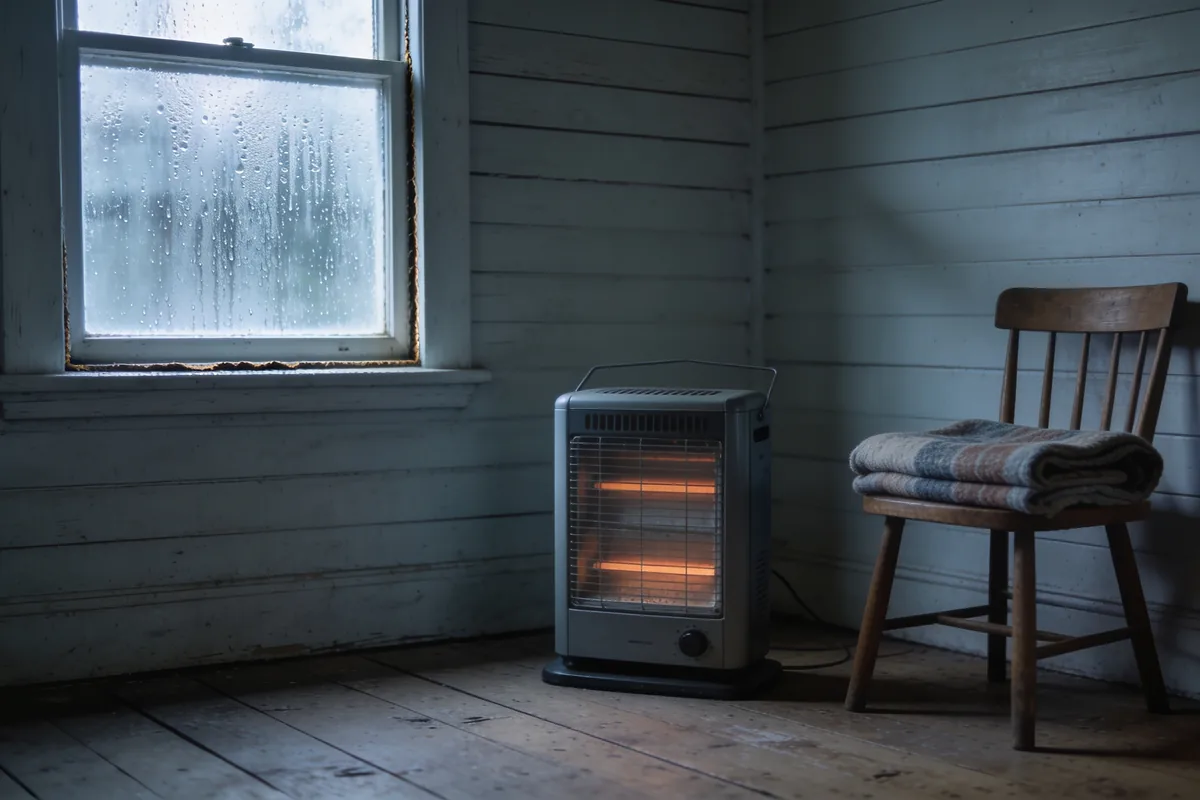
The first is humidity. Australian winters in many regions are damp rather than dry, and damp air takes heat from the skin faster, which is the mechanism above doing its work on a national scale.
The second is the housing. Much of the Australian housing stock was built to shed heat rather than retain it, through gaps and single glazing rather than insulation, so a nine-degree morning outside can be a thirteen-degree living room inside, and a room at thirteen degrees is doing very little to restore a person who has just come in from the wind. That is a building problem rather than a hardiness competition, and it is the reason the same temperature lands differently in different countries. The same cold that seeps into a house also gets under the bonnet of the car on a frosty morning, a consequence the site explains in its piece on why a car battery gives up in the cold.
It is worth separating two conditions that look identical from indoors. A house that is cold because it loses heat is a different problem from one that was never built to hold warmth, and the two have different remedies. Air moving through the fabric is the first target because it is the cheapest to address; the thermal performance of walls, floors and glazing is the slower, larger project behind it.
What to do about it
The practical response is short, and it follows directly from the mechanisms rather than from habit.
Dress for the wind, not the number. The outer layer is the one doing the serious work on a windy day, so it should be windproof before it is thick, and the layer against the skin should stay dry, because a wet base layer defeats the insulation above it. Cover the parts that get cold first, since the body will ration them regardless of what the forecast says. And on a still, sunny winter day, notice that the number is telling more of the truth than the morning at the bus stop led you to expect. For a fuller treatment of packing layers for a cold destination, the site’s family guide to season and packing covers the same logic applied to a suitcase.
One note on health, kept deliberately short because it belongs with a doctor rather than an explainer: cold air can matter for people with existing heart or lung conditions, and the Australian Institute of Health and Welfare publishes guidance on cold weather and health. A reader with those conditions should treat that guidance, and their own clinician, as the authority.
One refinement on the layering advice, because it follows from the mechanism: cover the parts that lose heat fastest before adding bulk where it helps least. A windproof shell over a dry base does more on a windy day than an extra jumper under a loose coat, and the hands and the head are the early wins because the body has already decided to ration them. The rest is temperament, and a little of it is preference.
What cold actually is
The apparent temperature is a translation of the air’s conditions into the language of a body, and once that is understood, the original paradox dissolves. The thermometer measures the air; the body experiences the movement of heat out of itself; both numbers are honest about different things. On a winter morning the felt number is usually the one worth dressing for, because the mechanisms behind it, wind, damp and the missing sun, are what the skin will actually meet. The reading is not lying. It is simply answering a narrower question than the morning asked.
Sources: Bureau of Meteorology – apparent temperature and the “feels like” model · CSIRO – housing energy efficiency and thermal performance · Australian Institute of Health and Welfare – cold weather and health








 Home & Garden1 year ago
Polycarbonate Roofing: What It Is Good For, and What It Is Not
- Travel1 year ago
Getting Involved in Alice Springs: Clubs, Events and Community Groups
- Healthcare1 year ago
Plantar Warts: The Treatment Ladder, From Patience to Surgery
- Healthcare1 year ago
GP Chronic Condition Management Plans: How Medicare Funds Ongoing Care (the plan formerly called EPC)
- Healthcare1 year ago
Heel Pain: Five Causes, One Order of Treatment
- Healthcare1 year ago
The Role of Speech Therapy in Treating Common Speech & Language Disorders
- Healthcare1 year ago
Laser Treatment for Nail Fungus: What It Involves and What the Evidence Says
- Travel12 months ago
The Ultimate Family Guide to Uluru: Fun Things to Do, Where to Stay & What to Pack