Science & Nature
Funnel-Web or Redback? Which Bite Needs a Bandage, and Which Never Does
A redback spider bite never gets a pressure bandage; a funnel-web bite always does. Where each spider lives, the first aid for each, and when to call 000.


Every summer the same headline comes round again. The funnel-webs are on the move, so check your shoes, check the pool, check the kids’ bedroom. It gets clicks, and it teaches exactly the wrong lesson, because it turns every dark spider in the laundry into the most dangerous animal in the country and leaves the reader with one reflex: wrap the bite tight and panic.
So here is the position this article argues. The dangerous mistake after a spider bite is not failing to name the spider. It is giving the wrong first aid. A funnel-web bite gets a firm bandage, a splint and an ambulance. A redback bite never gets that bandage. Hold on to those two rules the right way round and most of the fear in the headlines has nowhere left to go.
The framework is not mine. It comes from healthdirect, the government-funded health information service, whose spider bite page (reviewed October 2024) sorts Australian bites into three groups: funnel-web spiders and other big black spiders; redback spiders; and everything else. The first aid splits along the same lines, and this piece follows that split in order: where each spider turns up, the two first-aid routes, what to do when you did not get a good look, the signs that change the plan, and how to keep the odds down between now and autumn.
Where each one actually lives
This section exists so you look in the right place, not so you can name a spider at arm’s length. Nobody should be leaning in to check the shine on its back.
The Sydney funnel-web has a range the Australian Museum sets out with some precision: from the Central Coast in the north, south to the Georges River, and west to Baulkham Hills, with records from the Blue Mountains and Wollongong as well. It lives in silk-lined burrows tucked under logs and rocks, in shady, sheltered spots. The females mostly stay home. The males wander. They leave their burrows and roam, mostly over summer and autumn, and that is how they turn up in backyards, garages and swimming pools. Their season overlaps with the warm, sticky nights after a summer storm, the kind of evening when the number on the forecast tells you very little about how the air feels on your skin (InkNest has a whole piece on why the thermometer and the weather you feel disagree, and it is worth a read before the humid months).
The redback is a different animal in almost every sense. The Australian Museum records it right across the country, not in one corner of one state. It builds untidy webs in dry, sheltered places close to people: among rocks and logs, in junk piles, sheds and outdoor toilets, and in the places nobody has touched since last summer. It is less common in winter. Think about what sits undisturbed around your own house: the stack of spare pavers by the side fence, the folded outdoor chairs, the old esky, the timber framing above the barbecue, and the corners under the roofing over patios, pergolas and carports where outdoor furniture gets stacked for the cooler months.
Put the two side by side and the difference is plain. The funnel-web is a ground spider that comes out to you, often after rain. The redback waits in the dry corner you reach into without looking.
If it was a funnel-web or any big black spider: bandage, splint, 000
This is the section to remember, which is why it comes before the redback and before any of the caveats.
Healthdirect is explicit that funnel-web spiders and other big black spiders are treated the same way, and that a mouse spider bite gets the same first aid too. Here are the steps as healthdirect gives them:
- Lie the person down and keep them still.
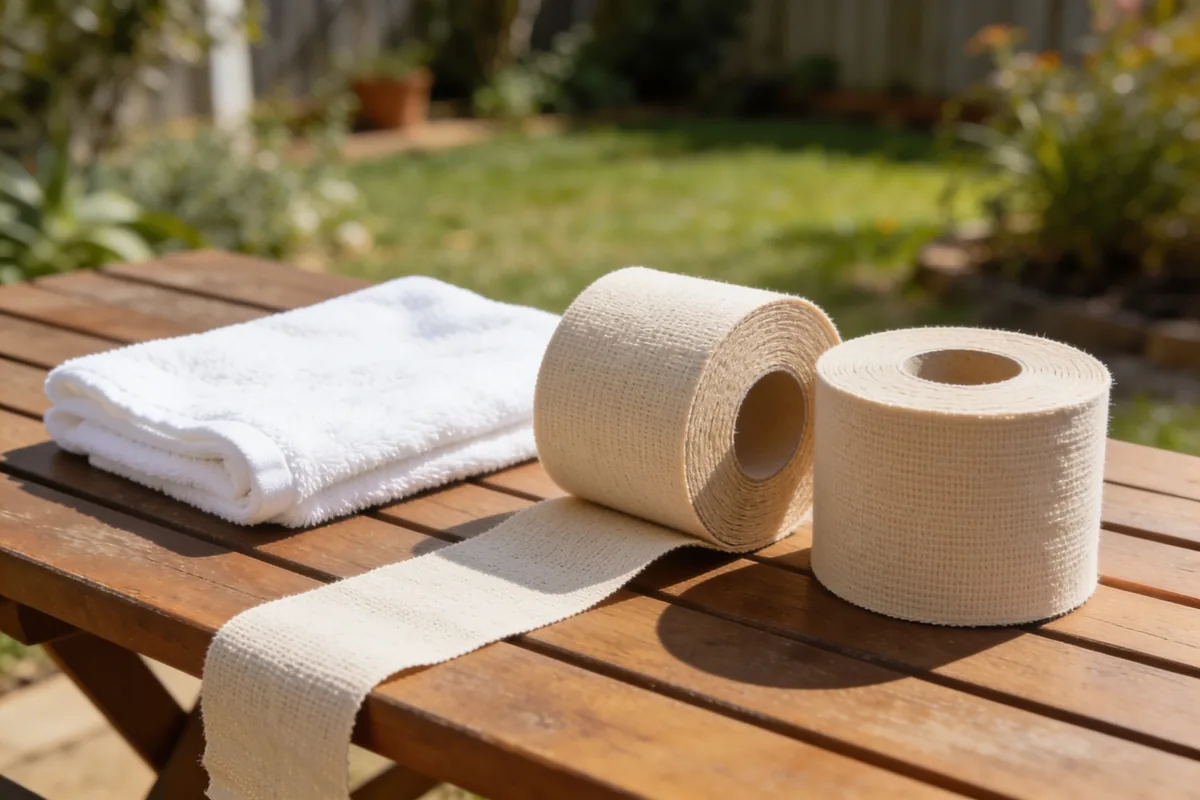
- Put an elasticated roller bandage, 10 to 15 cm wide, firmly over the bite.
- Apply a second bandage over the whole limb, starting at the fingers or toes and working up towards the body. It should be firm, but not so tight that it cuts off circulation.
- Splint the limb so it cannot bend.
- Mark where the bite is.
- Write down the time of the bite and the time the bandage went on.
- Call 000 and wait for the ambulance.
Look at what the list leaves out. There is no step where someone bundles the person into a car and drives them to hospital with the limb swinging about, and no step where the bite is washed and everyone hopes for the best. The person stays still, the limb stays wrapped and splinted, and the ambulance comes to them.
A word on the bandage itself, because the details are where good intentions go wrong. Healthdirect specifies an elasticated roller bandage, and it gives a width: 10 to 15 cm. The second bandage covers the whole limb, not a neat patch around the bite, and it starts at the far end, the fingers or the toes, then works back towards the body. Firm is the instruction. Tight enough to cut off circulation is the thing to avoid. If you have only ever seen a thin bandage wound around a sprained wrist, this is a different job.
The headlines also overstate the danger, and the Australian Museum’s own page for the Sydney funnel-web says why: there have been no fatalities since the introduction of antivenom. Read that as a reason for the first aid rather than a reason to relax. The treatment works when the person reaches it, and the bandage, the stillness and the 000 call are how they get there.
If it was a redback: never the bandage
Now the rule that the bandage-everything habit gets wrong.
For a redback bite, healthdirect’s first aid is short: wash the bite with soap and water, then apply a cold pack for 15 minutes. See a doctor if the symptoms are bad, and go to an emergency department if the pain is very bad. That is the whole of it. No bandage, no splint, no wrapping the limb. Healthdirect states the rule in plain terms: an immobilisation bandage is only used for funnel-web or mouse spider bites.
I am labouring the point because there is an adversary here, and it is not the spider. It is the well-meaning person at the barbecue who learned one piece of first aid years ago and applies it to every bite, sting and scratch. For a redback, that reflex is wrong, and healthdirect leaves no room for doubt about it.
A redback bite is miserable rather than dramatic. Healthdirect lists pain, muscle weakness and spasms among the symptoms, which is a long way from the movie version of a spider bite and still nothing to sit through stoically. It is common enough, too. The Australian Museum says more than 250 cases receive antivenom each year, and only the female redback’s bite is dangerous.
So the cold pack goes on, the clock runs for 15 minutes, and the pain decides what happens next. Bad symptoms mean a doctor. Very bad pain means the emergency department, not a night of waiting to see.
The contrast with the previous section is the entire point of this article, so here it is in one line. The funnel-web route is about keeping the limb still and wrapped until help arrives; the redback route is about washing, cooling and getting the pain seen to, with nothing wrapped at all.
When you cannot tell which spider it was
This is the awkward case. A bite in the dark, a spider that ran under the skirting board, a child who says “it was black” and nothing else.
Healthdirect’s default is the safe one: if it was a big black spider, treat it as a funnel-web. Bandage, splint, keep the person still, call 000. If you are going to be wrong, be wrong in that direction. Being wrong in the other direction is the mistake this article is about.
Children make the default more important. A small child may not be able to tell you what the spider looked like, how big it was or even exactly where it bit, and an adult who did not see it is guessing. A guess about a big dark spider gets the funnel-web treatment.
If you can catch the spider without losing a second, healthdirect suggests a jar and a piece of card, so the people treating the bite can identify it later. Do that only if it costs no time. The person comes first and the spider is a bonus.
If you are not sure what you are dealing with at all, two numbers are worth saving in your phone before summer starts. The Poisons Information Centre is on 13 11 26 for advice on bites and stings, and healthdirect is on 1800 022 222. Neither replaces 000 when someone is unwell. They are for the middle ground, the bite that is probably fine but where you would like someone qualified to say so.
The signs that change the plan
Two sets of signs override everything above.
The first is a severe allergic reaction. Healthdirect lists the signs of anaphylaxis on its spider bite page, and if any of them appear, it is a 000 call whatever the spider was. If the person collapses and stops breathing normally, start CPR and keep going until help arrives.
The second is the funnel-web pattern. Healthdirect names the symptoms to watch for: sweating, nausea, numbness around the mouth, twitching and difficulty breathing. Any of those after a bite from a dark spider, or after a bite from a spider nobody saw, means the funnel-web first aid and an ambulance, with no debate.
Write those down somewhere the household can find them. A fridge door works.
Keeping the odds down this summer
The prevention advice is unglamorous, which is probably why it never makes the headlines. Healthdirect’s list comes down to a few habits:
- wear gloves when gardening, especially when moving logs, rocks or anything that has sat still for a while
- shake out and check shoes before putting them on, particularly ones left outside or in the laundry
- clear webs, and relocate spiders rather than handling them
Families with a pool have one more habit to add. The Australian Museum notes that roaming funnel-web males end up in pools, so a quick look at the water and along the pool fence before anyone gets in is time well spent, whether the kids are confident swimmers or still working through swimming lessons at the right stage for their age.
Then there is the kit. The funnel-web steps assume you have two wide elasticated roller bandages and something to splint a limb with, and most households discover they do not at the worst possible moment. Check the first-aid kit now, while it is still spring and nobody has been bitten. If the bandages in it are thin, add two of the width healthdirect gives.
And one myth to put down while we are here. The white-tail spider, long blamed for nasty ulcers, is not considered dangerous, and current evidence says it does not cause those ulcers. It is one more spider the summer stories make worse than it is.
Bandage the funnel-web, ice the redback
Strip the headlines away and two rules are left, both from healthdirect.
A funnel-web, a mouse spider or any big black spider gets the firm bandage over the bite, a second bandage up the whole limb, a splint, a note of the time and a 000 call. A redback gets soap and water, a cold pack for 15 minutes, and a doctor or the emergency department depending on the pain. Never the bandage.
When you cannot tell which it was and the spider was big and black, take the funnel-web route. When signs of anaphylaxis appear, call 000 whatever the spider. And save 13 11 26 in your phone before the first humid night of the season, because that is when the wanderers come out.
Sources: Spider bites, healthdirect (https://www.healthdirect.gov.au/spider-bites); Sydney Funnel-web Spider, Australian Museum (https://australian.museum/learn/animals/spiders/sydney-funnel-web-spider/); Redback Spider, Australian Museum (https://australian.museum/learn/animals/spiders/redback-spider/)
Science & Nature
Why It Feels Colder Than the Thermometer Says: Wind Chill, Explained
Wind chill and apparent temperature explained for Australian winters: why 9 degrees can feel like 4, what damp air does to your skin, and how to dress for it.

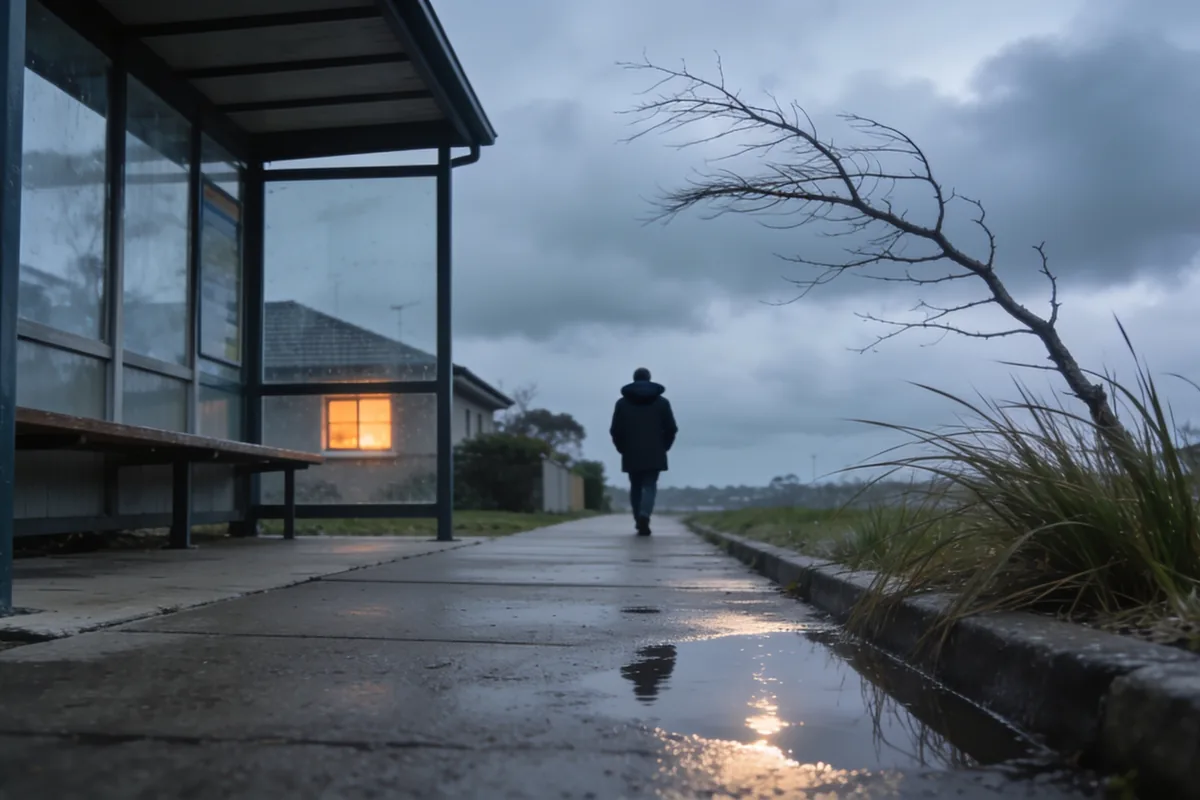
The thermometer is not lying to you, and it is not telling you the whole story
The forecast said nine degrees. Standing at the bus stop, the reading and the feeling disagree by a margin wide enough to matter: the number says a jacket will do, and the wind says otherwise. Both facts are correct. A thermometer is a precise instrument for one measurement, which is the temperature of the air, and it is not an instrument for a different question, which is how quickly a body in that air is losing heat. The gap between the two is the subject of this article, and it resolves into physics rather than conspiracy.
Why a number can exist for something a thermometer cannot measure
The figure people call “feels like”, and which the Bureau of Meteorology publishes alongside the temperature, is not a reading. It is a calculation. The bureau combines the air temperature with wind and humidity in a mathematical model, and the result is an estimate of how the conditions affect a person rather than a record of what any instrument encountered.
That distinction is the answer to a question that puzzles people every winter: if the real temperature and the felt temperature are different, how does a thermometer read one and not the other? A thermometer cannot feel wind, because wind is not a property of the air itself; it is a property of the air’s movement against something. The model stands in for the something, which is a human body with skin, and it converts three inputs into one number. Which means the “feels like” figure is best understood as a translation, useful precisely because the raw measurement leaves out the part that people experience.
Two limits on the figure deserve stating, because the model itself is careful about them. It estimates for a person in ordinary circumstances rather than for a specific body; mass, clothing and exertion all shift the real experience, which is why the published number is a reference point rather than a verdict. And it is a translation of conditions rather than a measurement of them, which is the distinction that keeps the thermometer honest. The thermometer was never asked the question the model answers.
The three things doing the work
Once the figure is understood as a model, the mechanisms behind it become concrete. Three effects account for most of the gap.
Wind. The body maintains a thin layer of warmed air against the skin, and moving air strips that layer away. The body then replaces it, which costs heat, and the faster the wind, the faster the cost. This is why a windy nine degrees can feel dramatically colder than a still nine, and why the effect is largest at the start of a walk, when the warm layer has had time to build up.
Damp air. Water conducts heat away from a warm surface more readily than dry air does, so humid cold drains heat faster than dry cold at the same reading. Damp clothing compounds the problem, because wet fabric insulates less than dry fabric, which is why the advice in wet cold is to change a soaked layer rather than simply add another one on top.
The absence of sun. Sunlight delivers radiant heat directly to the skin, and cloud removes it. Two days at the same temperature, one overcast and one clear, are genuinely different experiences, and the difference sits outside the arithmetic in a way people rarely account for: the thermometer reports the air, and the sun never was a property of the air.
Two of the three mechanisms have a further property worth noting: they compound rather than add. A wet, windy day combines the convective strip of the first with the conductive drain of the second, so the pair together can feel disproportionately worse than either alone would suggest, which is why the mechanisms are best considered together rather than one at a time. The sun’s return does the reverse. A clear, still afternoon can feel milder than the number by a margin that surprises people who have spent the day indoors.
Why you feel it in your fingers first
When the body senses that too much heat is leaving, it responds defensively. Blood vessels near the skin narrow, a response called vasoconstriction, and blood is drawn towards the core to protect the vital organs. The extremities are the first to be rationed, which is why fingers, toes and ears get cold first and warm back last, and why they are the places worth covering before the temperature itself seems to demand it.
Around that mechanism sit the personal variables, and they explain why two people at the same bus stop report a different morning. Body mass, age, metabolism and circulation all change how much internal heat a person produces and how efficiently it is distributed. Age is the variable most often asked about, and the honest answer is a tendency rather than a rule: circulation and heat production commonly change as people get older, and older people frequently report feeling the cold more, but the effect varies with general health, medication and body composition, so it belongs among the influences worth noting rather than a switch that flips at a birthday.
This is also the place to answer a question that gets asked plainly around this time of year: which part of the body gets cold first. The mechanism above answers it. The extremities lead, fingers and toes ahead of ears and nose, because those are the surfaces the body is most willing to ration and least able to protect by posture. That is why the chill in a bus queue reads as a collection of cold edges rather than a cold body, and why a person can feel genuinely warm under a coat while their hands write off the morning entirely.
Why it feels worse in Australia than the number suggests
An Australian winter at nine degrees is often reported as feeling worse than colder days spent elsewhere, and the explanation is not national character. It is conditions, and there are two of them.
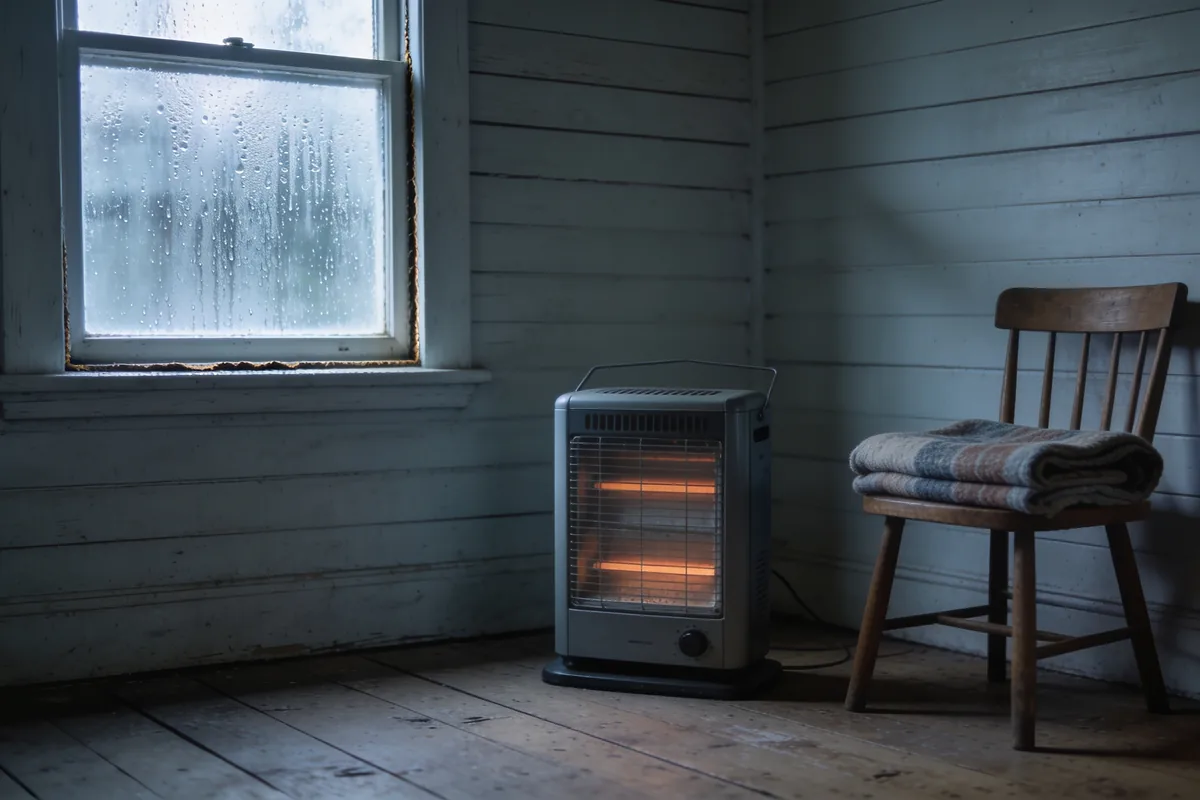
The first is humidity. Australian winters in many regions are damp rather than dry, and damp air takes heat from the skin faster, which is the mechanism above doing its work on a national scale.
The second is the housing. Much of the Australian housing stock was built to shed heat rather than retain it, through gaps and single glazing rather than insulation, so a nine-degree morning outside can be a thirteen-degree living room inside, and a room at thirteen degrees is doing very little to restore a person who has just come in from the wind. That is a building problem rather than a hardiness competition, and it is the reason the same temperature lands differently in different countries. The same cold that seeps into a house also gets under the bonnet of the car on a frosty morning, a consequence the site explains in its piece on why a car battery gives up in the cold.
It is worth separating two conditions that look identical from indoors. A house that is cold because it loses heat is a different problem from one that was never built to hold warmth, and the two have different remedies. Air moving through the fabric is the first target because it is the cheapest to address; the thermal performance of walls, floors and glazing is the slower, larger project behind it.
What to do about it
The practical response is short, and it follows directly from the mechanisms rather than from habit.
Dress for the wind, not the number. The outer layer is the one doing the serious work on a windy day, so it should be windproof before it is thick, and the layer against the skin should stay dry, because a wet base layer defeats the insulation above it. Cover the parts that get cold first, since the body will ration them regardless of what the forecast says. And on a still, sunny winter day, notice that the number is telling more of the truth than the morning at the bus stop led you to expect. For a fuller treatment of packing layers for a cold destination, the site’s family guide to season and packing covers the same logic applied to a suitcase.
One note on health, kept deliberately short because it belongs with a doctor rather than an explainer: cold air can matter for people with existing heart or lung conditions, and the Australian Institute of Health and Welfare publishes guidance on cold weather and health. A reader with those conditions should treat that guidance, and their own clinician, as the authority.
One refinement on the layering advice, because it follows from the mechanism: cover the parts that lose heat fastest before adding bulk where it helps least. A windproof shell over a dry base does more on a windy day than an extra jumper under a loose coat, and the hands and the head are the early wins because the body has already decided to ration them. The rest is temperament, and a little of it is preference.
What cold actually is
The apparent temperature is a translation of the air’s conditions into the language of a body, and once that is understood, the original paradox dissolves. The thermometer measures the air; the body experiences the movement of heat out of itself; both numbers are honest about different things. On a winter morning the felt number is usually the one worth dressing for, because the mechanisms behind it, wind, damp and the missing sun, are what the skin will actually meet. The reading is not lying. It is simply answering a narrower question than the morning asked.
Sources: Bureau of Meteorology – apparent temperature and the “feels like” model · CSIRO – housing energy efficiency and thermal performance · Australian Institute of Health and Welfare – cold weather and health


 Home & Garden1 year ago
Polycarbonate Roofing: What It Is Good For, and What It Is Not
- Travel1 year ago
Getting Involved in Alice Springs: Clubs, Events and Community Groups
- Healthcare1 year ago
Plantar Warts: The Treatment Ladder, From Patience to Surgery
- Healthcare1 year ago
GP Chronic Condition Management Plans: How Medicare Funds Ongoing Care (the plan formerly called EPC)
- Healthcare1 year ago
Heel Pain: Five Causes, One Order of Treatment
- Healthcare1 year ago
The Role of Speech Therapy in Treating Common Speech & Language Disorders
- Travel12 months ago
The Ultimate Family Guide to Uluru: Fun Things to Do, Where to Stay & What to Pack
- Healthcare1 year ago
Laser Treatment for Nail Fungus: What It Involves and What the Evidence Says